Today, we saw independent benchmarks of Qualcomm's new 4nm chip that provided 50% (Geekbench) to 100% (Cinebench) more multicore performance than M2, while using 23W. And it can efficiently encode AV1. Maybe M4 will catch up.
Well, benchmarks are nice. But a processor is not an end user product. How do you think this is going to be as a product once you put it in a PC running Windows - especially as Microsoft struggles trying to get third party apps on ARM and MS’s own substandard x86 emulator
I can not fathom the level of incompetence by vendors to want to install Windows on ARM devices.
1. The only reason you make people deal with Windows is backwards compatibility.
2. When you advertise it as a Windows laptop people will expect to be able to run their apps (they expect backwards compatibility). RIP your reputation and support inbox.
Yes, it will be harder to sell when it runs Linux. But it's the correct expectations management and at least it will suck less.
Oh well. This is what Google will do with their Chromebooks. Windows on ARM has the same future as the Windows Phone.
It's slower and one of the main things people want Windows to run is games. Also, games are one of the things emulation systems are most likely to break, because games use all kinds of weird performance hacks and come with heinous anti-cheat systems.
I had a Thinkpad X13s for a while that worked quite well except for a video issue (used pawn shop purchases are a risk like that). Firefox, Edge, and MS Office worked great natively on ARM. LibreOffice worked just fine via the MS x86 emulator. And the X13s had the old Snapdragon 8cx Gen 3 with less than half the performance. Granted, I wasn't doing any heavy lifting with it the month I had it.
I mainly got it to test out my PortableApps.com stuff running under ARM. I'm doing it now on a Macbook Air M1 with Windows 11 running under UTM.
I got it to handle 3 things: a laptop I can use as a laptop for basic stuff and to use to remote in to my development desktop at home, a Windows ARM machine I can test my Windows x86/x64/ARM64 software on, and a Mac to test out my software running under macOS via Wineskin. It's a little clunky but it works for all 3.
My original set was a regular full-fat Windows laptop, a super-cheap used Galaxy Book Go Gen1, and a used Intel Mac Mini. I later replaced the Windows laptops with the Thinkpad 13s. If it hadn't had video issues, I'd still be using that. But a used base model Macbook Air M1 serves the purpose for now.
I'll likely switch back to an Apple Silicon Mac Mini and a Windows laptop of some sort later as I much prefer a Windows laptop to my current Macbook.
Intel and AMD should get ahead of the curve and put some real support behind desktop linux, which has an actual path to ARM adoption for a much larger portion of its software.
But then again at least one of them should have been doing that 20 years ago.
I don't use Windows. The Raspberry Pi has great Linux support, and the Linux Geekbench scores were even higher than in Windows. Unfortunately, I couldn't find Linux Geekbench scores in the 23W configuration.
Without the ecosystem who wants Windows? And what will it do for reputation of the vendor or Microsoft when people can't run their apps.
People are already buying non Apple ARM laptops. They are called Chromebooks. They can run Linux apps and Android apps. And thats more than most consumers would expect.
Many schools in the US provide their students with laptops and Chromebook is the overwhelming favorite. The student has to return the laptop at the end of the year. As an anecdote, I know of no one who bought a Chromebook for personal use. My friends, colleagues and acquaintances are buying Macs or Windows machines if they want a laptop, iPads or Android tablets if they just want a tablet.
In a way, Google's strategy of getting Chromebooks into schools may have backfired as they're largely seen as kids' computers.
They are in use by the millions in schools. I have one and I really like, can run android apps, chrome web browser, and in the crostini linux system I can run any apps, dev tools, web browsers, emacs, and it is native. I like it better than raw linux because of the built in android support.
I gave chromeos laptops to my family because they aren't trustworthy. Now they have reliable laptops and don't get virus infections or os problems.
That's a complicated story. No one really wants surveillance capitalism. I don't think google copies what I'm doing on my chromebook, but almost every website has google tracking. Chrome has google tracking. You can use non-chrome browsers on chrome os, they are all there via the linux subsystem. You can also run the android ones.
This also shows the power of marketing. ChromeOS is a subset of Linux -- it doesn't do anything you couldn't always have done with Ubuntu. But for years people said that normal people don't want Linux, it doesn't run their apps, they can't use it.
One company shows up with a marketing budget and it's got triple the market share and is now up to the level that Mac traditionally held when all of the things "nobody makes for Linux" because "nobody uses it" supported that.
We're also at the point where things like bank websites don't "officially" support Linux, but as a general rule they don't have any problems on it, and if they did have problems it would be a problem the bank has to deal with instead of a problem the customer has to deal with.
That’d be pretty incredible if it plays out in reality once products are released. Though it sounds too good to be true.
I’m skeptical since Qualcomm has failed for years to catch up to Apple processors in the smartphone market. So why would their first effort in desktop processors be so much better?
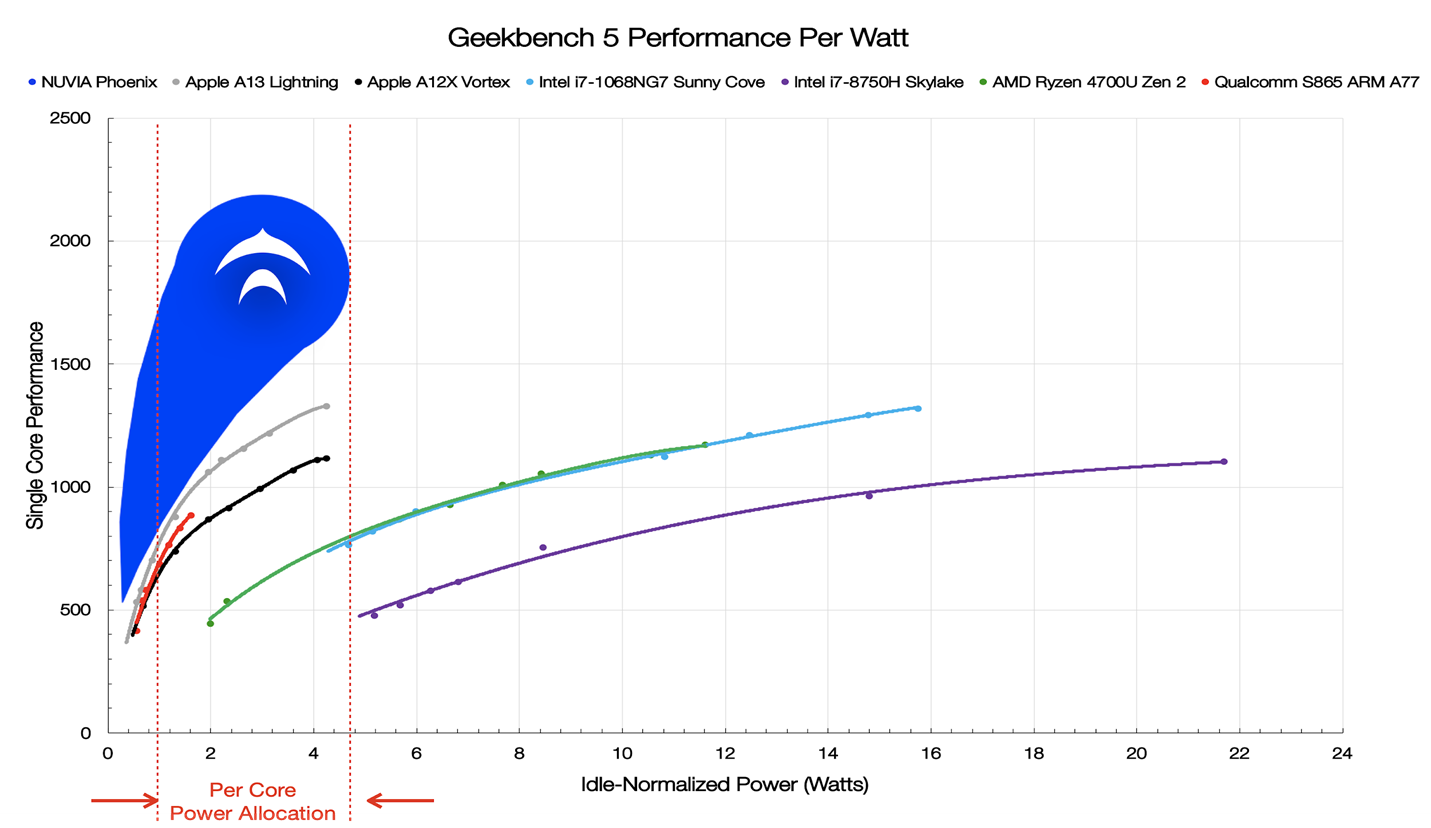
There's actually a good reason. In short, a large portion of the apple silicon team ended up leaving a few years ago to could start a new company named Nuvia. Their goal was to produce high performance chips for the enterprise/server market, and they had some very aggressive performance targets [1].
Then, in early 2021 Qualcomm ended up acquiring Nuvia, and these new chips are the first showings of this acquisition. Naturally there's a lot of hype since said team represents a lot of the talent that made apple silicon so good in the first place.
Apple Silicon was great because Apple had invested huge amounts of resources for a decade on smartphone processors first, not because they had some kind of geniuses on the project.
It is no doubt promising that Qualcomm has brought in more talent, but it still takes time and effort to turn that into a best-in-class product. I’m not saying it’s impossible, though I’ll be skeptical of the hype until I see a real product.
> Apple Silicon was great because Apple had invested huge amounts of resources for a decade on smartphone processors first, not because they had some kind of geniuses on the project.
Right, and the guys who learned all the hard-won lessons along the way walked out the door to start a company, bringing along expert knowledge of Apple's designs and processes. And then Qualcomm bought them.
So on a surface level it seems implausible that QC could produce such a chip. But when you zoom out and go "oh, Qualcomm effectively bought Apple's senior chip engineers" it starts to make more sense.
It would be like if Qualcomm's top modem engineers started a company, which Apple bought. And then a couple years later Apple's long-running modem project mysteriously turned a corner and was ready to launch an exceptional modem. Like yeah, no kidding.
So yes, we need to see independent benchmarks and make sure it's not hype. But it's not so unbelievable that Apple's former top engineers could also produce a good a chip for another company. There's nothing magical about the Apple office--it's the engineers.
Engineering something as complex as a CPU is a long process regardless of how smart and experienced your engineers are. I mean, you can certainly speed it up with great talent, but there is still long and hard work to do with any difficult engineering challenge.
I’m not saying there’s something special about Apple other than the scale of their investment over a long period of time.
It’s the same deal for Qualcomm and their 5G modems. Apple no doubt has hired many talented engineers to make a custom 5G modem. But Qualcomm’s modem is still the best one around. It’s hard to catch up because Qualcomm has been investing heavily in that space for a very long time.
Again, that’s not to say Apple won’t ever catch up. Just that I wouldn’t expect that their first effort will be better than Qualcomm’s modems.
Nuvia has been working on this tech for years before being snapped up by Qualcomm. And before that, those same engineers had worked on Apple silicon for years. Why do you keep thinking this is an overnight thing?
To be fair it’s a bit of a myth that only mobile cares about efficiency and thermal management. It is definitely a factor for HPC and server too.
Apple scaled iPhone first designs up to the M* Ultra chips. Going from HPC to a mid wattage laptop is definitely serious work, but I don’t think it’s impossible. Especially with ARM.
The whole point of this thread is that those same Apple engineers made these Qualcomm chips.
Yes. Apple iterated over many, many years. Learning so much along the way about how to make performant, efficient ARM designs.
And then a bunch of the most important of those guys left to start their own company.
And then Qualcomm bought that company.
Y’all are acting like a few college kids from Stanford made Qualcomm a new CPU over their summer internship. “It takes longer than that to make a good CPU.” Yah no shit!
You are taking crazy pills. Making a high performance chip requires more than just having a bunch of talented and experienced engineers. Is it a necessary requirement? Sure! But it’s far from sufficient.
Apple brought on PA Semi and then slowly iterated on actually shipping hardware for years. They didn’t hire PA Semi and have a best-in-class product on the first go.
And those same guys who slowly iterated on shipping hardware for Apple for years are at Qualcomm now.
Are you saying it’s a requirement that these guys ship a crappy chip first? Why? They already know how to make good ones.
Can you tell me what more they need other than their talent and years of experience to make a good chip? Because if it’s just “I demand they make a bad chip now because they’ve changed logos on their corporate polos” I don’t think this conversation has anywhere to go.
Is the assumption here Apple has developed a business process for building best-in-class CPUs while treating its engineering workforce as fungible commodities? If so they've succeeded in doing what Intel has been trying to do for decades.
> Apple Silicon was great because Apple had invested huge amounts of resources for a decade on smartphone processors first, not because they had some kind of geniuses on the project.
Given that they were confident enough to leave and start their own company, I'm not sure this is true. Indeed I wouldn't discount the value of high talent density.
> I’ll be skeptical of the hype until I see a real product.
They have shown real hardware demos [1] to reviewers already, and the numbers look solid. Obviously there are no comparisons vs M3 yet, but it seems promising.
Not one or two Geniuses, but a really good team. They lost supposedly key members of that team which threw them off track. An organisation can recover from this, but it takes time and money. Not everyone likes to work under Apple-like working conditions towards Apple's goals.
Sure, but they’ve been behind the whole time. It’s not like they’ve been trading blows each generation with Apple.
If the premise is that Qualcomm hired a team of super talented engineers who can build a product that competes with Apple, then those engineers will still need time to develop a product.
Again, maybe their new processors will be everything they claim. It’s possible for this to happen. I’m just not willing to buy into the hype yet.
I am going to go out on a limb and suggest that Qualcomm's pre-production benchmarks are of no value and the actual performance of real devices will be worse than Apple.
To be fair, I don't think many would have trusted that Apple's M1 chips were going to be as good as they were before they were actually in consumers hands. I'll reserve judgement too until that's the case.
What you didn't mention is that the Snapdragon X Elite has 12 high performance cores, making it a M2 Max competitor and not an M2 competitor, at least on the CPU side. The GPU is disappointing with no ray tracing support.