There is the cartel effect going on (lobbying against municipal broadband), but even in the absence of that, it's still tough to be an ISP. Think about how much money it costs to dig up a street and put cables under it, and then run them into each house along that street. People that want to use the Internet don't have enough money to do that, and that's why the business is tough.
My experience from working at fiber ISPs is that the infrastructure is the hard part. Google Fiber got a good deal in its partner cities to run the fiber next to existing power lines (which not every city has, they're all underground here). When they ran out of easy install opportunities, expansion stopped. My experience was the same at a NYC-based ISP. If your building was on a street that already had open access tunnels, then we could serve you. If not, you were out of luck.
If you figure out how to profitably get wires to people's houses, you solve the ISP's problems. I've seen proposal after proposal for trenching, microtrenching, nanotrenching, picotrenching, attotrenching... and none of these worked in the real world. (I might have made some of those up; I think "attotrenching" is what I called just running cables into people's windows and not burying them. Didn't try it, but I imagine it would irritate people with its intrinsic flakiness and ugliness.)
The rest is simple, you can set up a full fledged fiber ISP for under $1000 in equipment! Figure out how to dig up the street profitably and you unlock a ton of wealth. (This, incidentally, is why people keep trying to sell wireless solutions. No streets to dig up. WiFi with pringles can antennas! 5G! A huge constellation of satellites! And honestly, it kind of works. But not so well that people are switching from their fiber connection to Starlink or whatever.)
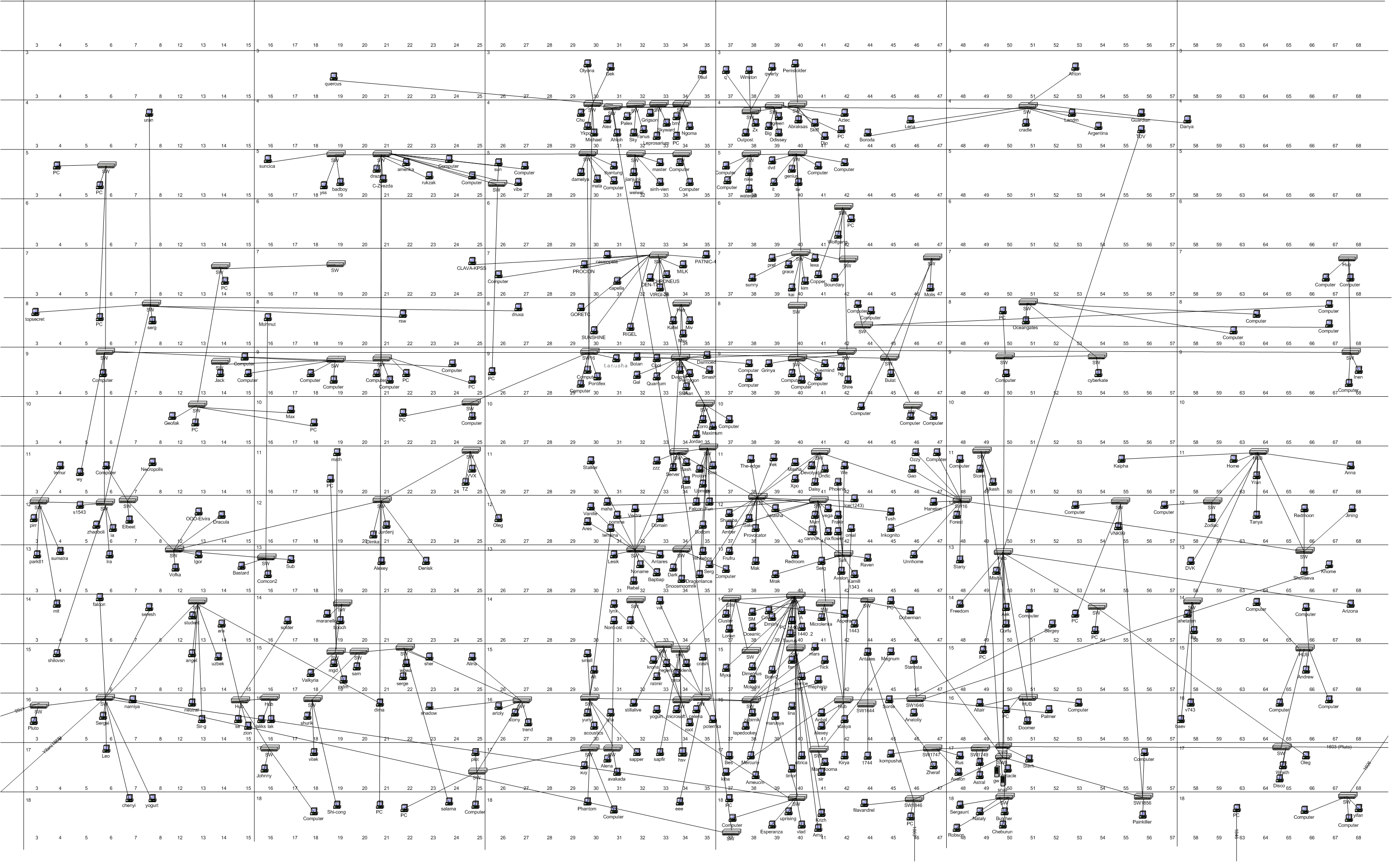
Home LANs and early ISPs were built with the same equipment by the same kind of enthusiasts. Typical commieblocks have enough place for cable shafts inside, though. Then the building roofs would get connected (with any kind of cable having any properties you could find) in the same grassroot manner. All that free libertarian enterprise, and now, after a number of tech upgrades, mergers, and so on, you can get gigabit for ten bucks.
I get it's not that suitable for suburbian installations, but the idea is that it all starts small and ugly. That's why your cable corporations are never ever going to allow even a tiny bit of alternative to happen, heh.
There are plenty of feasible wireless ISP technologies. They have a directional antenna on the subscriber side, pointed at a shared tower.
I've had mixed experiences with them. The wireless link itself tends to be 100% uptime with no bandwidth contention. The quality of the network between the tower and the internet backbone varies wildly depending on the ISP.
Anyway, last mile of 10's to 100's MBit symmetric over multiple miles is a solved problem these days.
The remaining problems are mostly political. Sadly, that's been true since dial up modems became obsolete.
>> If you figure out how to profitably get wires to people's houses, you solve the ISP's problems. I
Same as they did with electricity a century ago. If you want to provide service to the profitable urban area then you must run wires to the non-urban areas too.
>If you figure out how to profitably get wires to people's houses,
The same way we got power to the homes which was government assistance and the private companies not expecting them to be totally profitable in a few years.


My experience from working at fiber ISPs is that the infrastructure is the hard part. Google Fiber got a good deal in its partner cities to run the fiber next to existing power lines (which not every city has, they're all underground here). When they ran out of easy install opportunities, expansion stopped. My experience was the same at a NYC-based ISP. If your building was on a street that already had open access tunnels, then we could serve you. If not, you were out of luck.
If you figure out how to profitably get wires to people's houses, you solve the ISP's problems. I've seen proposal after proposal for trenching, microtrenching, nanotrenching, picotrenching, attotrenching... and none of these worked in the real world. (I might have made some of those up; I think "attotrenching" is what I called just running cables into people's windows and not burying them. Didn't try it, but I imagine it would irritate people with its intrinsic flakiness and ugliness.)
The rest is simple, you can set up a full fledged fiber ISP for under $1000 in equipment! Figure out how to dig up the street profitably and you unlock a ton of wealth. (This, incidentally, is why people keep trying to sell wireless solutions. No streets to dig up. WiFi with pringles can antennas! 5G! A huge constellation of satellites! And honestly, it kind of works. But not so well that people are switching from their fiber connection to Starlink or whatever.)