I'm concerned our justice systems is expending enormous resources investigating and prosecuting these cases as felony crimes on behalf of the MPAA and RIAA lobbies (which have a revolving door of former fed prosecutors as employees/lobbyists). The cases are more properly pursued in civil court where the pirates should be sued for the damages they cause (not agreeing with MPAA's damage assessment, that's for the judge/jury).
Mis-using international racketeering laws and cooperation agreements between agencies to pursue online software pirates is not what these systems were created for. Another example is Kim Dotcom. He may indeed be liable for significant damages (I don't know) but the MPAA designed their attack knowing that the prosecution itself would inflict massive punishment (ending the company, incarcerating or confining the execs) before it ever got to court. It's a clear abuse of the global justice system and a waste of its resources.
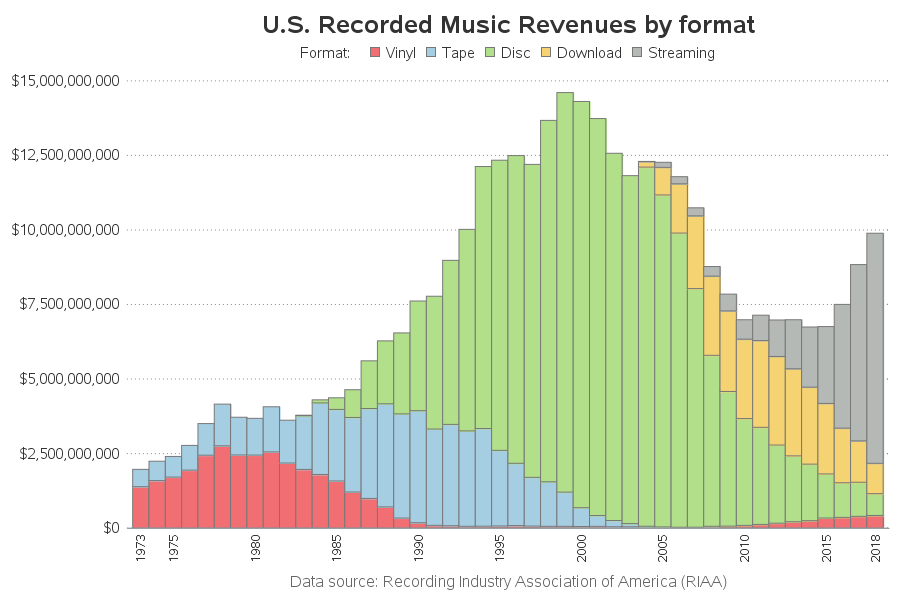
And all of that is before we even get to the moral and ethical debate about the true damages from purely electronic, not-for-profit media piracy clubs. Studies have shown that frequent pirated media downloaders are among the relevant industry's best, highest-spending customers. And it's also been shown that the majority of users will pay reasonable prices for convenient media access via subscription or purchase (Netflix, Spotify, ITunes, etc). Despite "crying poor", the music industry is now back to making more than it ever did in the era of $18 CDs, with more (and happier) customers.
Dotcom's company's whole purpose was to make money facilitating movie piracy, under the guise of being an innocent file storage and sharing company. Their internal processes and procedures were designed to make it appear that they took down pirated material when informed of its existence while actually making sure it was still there and accessible via other links that the copyright owner had not yet discovered. They actually reprimanded employees if they actually took something down for real.
Go find the court papers for the indictment. They include a bunch of internal emails from Dotcom and other top executives that show how the place actually worked.
mrandish's point is that the amount of effort spent on Dotcom by authorities was disproportionate to the size and importance of the crime, and abusive of the legal system. This might well be true at the same time as the fact that Dotcom was a criminal.
I would tend to agree with mrandish, for the simple fact that they don't do that sort of raid even for people who owe the taxman several multiples of the profits Dotcom allegedly/apparently made.
> Piracy destroys jobs, opportunity and initiative.
So what? Let them be destroyed.
I'd rather sacrifice some jobs than watch gigantic media conglomerates take over the computing industry and destroy our computing freedom with their DRM. There is no other way for them to enforce copyright in the 21st century so that's exactly what they'll try to do. They won't rest until every computer available to the public is locked down like a video game console. That will of course spell the end of playful hacking as Hacker News knows it. Not only that, this sort of control over what software our machines may or may not run will be a stepping stone towards greater governmental control over key technologies such as effective free software encryption, paving the way for total population surveillance. Non-essential jobs are nothing compared to these important issues.
The copyright industry wants to sell what's essentially huge numbers to the public. That's how ridiculous copyright is. It's the 21st century, the age of information. Instead of worrying about job destruction, better to abolish it straight up so that people will be forced to figure out a new business model.
Something tells me that if the fictional Star Trek "replicator" would suddenly be invented today, with the ability to copy any physical item, we'd see a similar story. Imagine, the removal of goods scarcity. Feed everyone on earth. Everyone could have anything they want just constructed out of thin air for them! It would be a utopia. But the same people would make the same argument against that utopia: "What about jobs? You can't just copy someone's hard work without paying for it!" They'd get the government to ban replicators and criminalize their use. Or, they'd only allow certain, licensed companies to use replicators, maintaining an artificial scarcity so that things could still be sold. We'd toss away world-changing technology in order to maintain the status quo where people had to work and pay for scarce goods.
I think you’re right but I’d love to see them try to argue that pro-scarcity point to its conclusion. Why would we need jobs if the point of jobs is to get money and the point of money is to get scarce goods. The replicator would make the whole system obsolete unless the pro-scarcity side straight up admits they just want inequality for its own sake.
I'd rather sacrifice some jobs than watch gigantic media conglomerates take over the computing industry and destroy our computing freedom with their DRM.
Honestly I've never come across a study that says piracy even has a significant impact on the media industry, in fact some studies found the opposite. People that like something they pirated, which is not many people really, will usually go buy it.
I find those studies to be ... I'm not sure what the word is. Laboratory artifacts?
When a small portion of super-enthused users are doing the bulk of the pirating, piracy is going to manifest different effects than if it's massively widespread with a minimum barrier to entry.
It's not uncommon for there to eventually be a post in one of these threads to the effect of "there shouldn't be IP at all." I imagine as you move along the spectrum from the current state of torrenting, towards "no IP at all," the effects of piracy on media purchases are going to veer further and further from what current studies show.
Eh, artists have bills to pay. I try to buy e-books to support my favorite sci-fi authors, but it feels a bit silly that downloading the epub from libgen is literally less hassle than buying it on Google Play.
Copyright law has a place, but as it currently stands, it doesn't protect independent artists sufficiently, while giving large media firms disproportionate power. This ultimately hurts small content producers a lot more than it helps them, because they have to compete with companies much larger than them that can afford to use their economies of scale to bully independent artists into submission.
The fact that it's so much hassle to buy something just goes to show that Google has no incentive to compete on product, where the product is the marketplace itself. Piracy is an indication that the market has failed to produce a satisfactory distribution mechanism, and allowing large corporations to use legal action to shelter themselves from having to improve their offering hurts both consumers and small businesses.
Yes, in a pre-computer and pre-internet society. It has no place in the 21st century.
> allowing large corporations to use legal action to shelter themselves from having to improve their offering hurts both consumers and small businesses
You know what sucks? Wanting to buy something, being willing to pay for it and finding out that what I want is not available to me. Because of copyright.
Every day I log into Netflix and search for something I want to watch, Netflix autocompletes the movie's name and yet it doesn't actually show up in the results. It's there, just not available to me. I lost count of the number of lesser known works I wanted to view but couldn't because they aren't popular and therefore not profitable. I don't even try to find them anymore.
Somehow, copyright stops the service from offering the content to me. I suppose I'm part of some irrelevant market segment they don't care about. So it's not just a service problem.
> I suppose I'm part of some irrelevant market segment they don't care about. So it's not just a service problem.
That is exactly what a service problem looks like. The service problem is caused by having strong copyright available to large corporations that can use it as a profit optimization tool. The role of copyright should be to protect small content creators, but that is not how it is implemented.
>You know what sucks? Wanting to buy something, being willing to pay for it and finding out that what I want is not available to me. Because of copyright.
This seems to me to be a very strange mindset. Someone else has created content you want, is not offered for sale to you, so you it is in your right to seal it?
What makes this OK and where does it end?
What makes it okay is that intellectual property can be copied infinitely without depriving the original owner of it, and the fact that they refuse to sell it to you means you're not even depriving them of potential income, so there's no way of claiming there was any damage done.
It ends when you start talking about actual property that has limited physical supply. Intellectual property isn't real. It naturally has infinite supply, so its market value should be zero.
And artificial scarcity is just kind of... fine? We don't mind people intentionally destroying (or locking away) things just to increase the monetary value of other things?
Why would you assign malign intention to it? The facts are that there is scarcity and that where there is scarcity and demand then the monetary value will rise above zero. Just because someone can make something unlimited doesn't mean they should, especially to satisfy your desires - that's the job of you and your hard work or your wallet.
The same goes for the "it won't deprive you of anything" argument. There are plenty of things we all own that if someone borrowed it wouldn't necessarily negatively affect us, but that doesn't mean that we should lend them while we're not using them, especially not for free simply because it would satisfy someone else's desires and pocket if it were free.
There should be better delivery of items given the tech we have (it's better than it was but could be much better); there should be copyright laws that benefit the actual creator more, not just huge corporations (these appear to be getting worse); the price of media is often too high (though again, it's a lot better than it was); none of these are solved by pretending we could or should live in a communist utopia.
Thanks for responding and making your position clear. It seems that your belief that intellectual property should not exist is central to your position. I tend to disagree, but I am sure you have heard the objections.
If you don't believe that intellectual property is legitimate, why isnt it OK to deprive someone of potential income from it in the cases where it is monetized? Does the attempt to monetize it grant some sort of exclusivity?
Copyright infringement is not stealing. When the content is not being offered to people of a certain demographic, the rightsholders literally cannot even claim that they're causing any damage even if they choose to "pirate". They never had the chance to buy it in the first place. Even worse is how they then blame "piracy" when asked why their goods are not available!
Yup. I'd been a relatively happy HBO Now user for years, but just canceled because they recently inexplicably broke playback on Linux browsers (which had worked properly for years). I had a useless back-and-forth with a customer service rep about how increasing friction like this -- especially with someone who is perfectly willing and able to pay for the service -- just drives people to piracy.
I had this problem with Netflix for awhile. I could play it in Linux Firefox if I switched my user agentstring. Contacted them saying "Hey, just unblock the useragent." They were insistent that that's not what they were doing and that they didn't block linux or Firefox. Even got pushed up a tier. A month later they unblocked it, but still, why block it in the first place?
Indeed, and we should support those who create the works we enjoy, but consider that the model of buying individual works from a publisher is rooted in the obsolete requirement to create a physical good upon which the work is distributed.
Given that we now live in an age where the cost of distribution is effectively $0, perhaps we need to find a new model for compensating creative works.
Personally, I'm a big fan of things like Patreon, which let me support people who's work I enjoy more-or-less directly and allows creators to keep their creations free for all to enjoy.
The fun thing is that's pretty much how the classical composers worked in the past, just with a single/few rich patrons per artist rather than a number of people chipping in.
If the stated goal is that artists only deserve what I want to pay and there is too much graft and payment friction with conglomerates shouldn’t an ethical fan/pirate site always link to the artists Patreon?
So? That doesn't change anything. The needs of creators cannot override our need for computing freedom. Enabling creators to pay their bills by charging money for data will have serious consequences for society in the long term. If they have bills to pay, they can find something else to do. Ideally, they should get paid for the act of creating rather than the final result.
> it feels a bit silly that downloading the epub from libgen is literally less hassle than buying it on Google Play.
"Piracy" is actually the superior service. It's how everything should work. The copyright industry simply cannot compete and will never be able to compete. The only way they can win is by making the competition illegal.
I downvoted you, but let me try to understand your worldview a bit here, tell me if you are in disagreement with these ideas I'm attributing to you based on what I'm reading:
1.) If it can be pirated, it should be pirate-able.
Taken to the extreme, does this extend to the realm of people's appearance? With deepfakes I can 'pirate' someone's face and voice to be used for things they would never agree to.
2.) All distribution mediums are middle-men between a creator and a consumer. Whoever is making money as a middle-man is in the wrong. The person making the least money as a middle-man is the least-wrong.
Piracy services only make money on selling ads and file-download/storage subscriptions, and not on a per-consumption basis. They make the least profit from the middle-manning, so pirating services are the least wrong middle-men.
3.) Creators don't need monetary/financial/fame incentives, they should only create for the act of creation-itself.
Consumers will naturally request and "commission" more work from the creator if their work is good.
I know I'm taking it a bit far on the first one, but I can't help but think that you might agree based on reading your comments.
> 1.) If it can be pirated, it should be pirate-able.
If it's data, it can be freely copied and processed. There's little anyone can do in order to stop it even if it's not supposed to be happening.
> Taken to the extreme, does this extend to the realm of people's appearance? With deepfakes I can 'pirate' someone's face and voice to be used for things they would never agree to.
I'm not sure about this. I feel that the real damage is the defamation of a real person's character by the fabrication, not the act of modifying an image or video of the person.
2.) All distribution mediums are middle-men between a creator and a consumer. Whoever is making money as a middle-man is in the wrong. The person making the least money as a middle-man is the least-wrong.
I generally agree with this. For example, when people buy music CDs most of the money goes to the record company while relatively little goes to the actual musicians. I think that's screwed up.
I also think it's extremely offensive when "pirate" sites try to monetize their sites in any way.
> Piracy services only make money on selling ads and file-download/storage subscriptions, and not on a per-consumption basis. They make the least profit from the middle-manning, so pirating services are the least wrong middle-men.
None of this is necessary. There is absolutely no need for centralized and costly streaming platforms or hidden "pirate" servers. All of these are solutions to problems created by copyright.
Were it not for copyright, we'd be able to share all kinds of data over peer-to-peer technologies like napster, torrents, IPFS. It's a solved problem. The solutions are so good they'd kill the content distribution industry were they legal.
> 3.) Creators don't need monetary/financial/fame incentives, they should only create for the act of creation-itself.
I have no problem with creators getting paid. I just think they shouldn't be able to get paid by exploiting the copyright system. They could create a Patreon and get paid for the act of creating instead. That'd enable them to release their works into the public domain.
> Consumers will naturally request and "commission" more work from the creator if their work is good.
> If it's data, it can be freely copied and processed. There's little anyone can do in order to stop it even if it's not supposed to be happening.
Property laws exist to stop the strong from just taking what they want from the weak. Effectively, someone can point to something and say "this is mine, you cannot have it", and either society backs them up on this or it does not. The only thing preventing someone from stealing your car, house, money, etc are laws.
The same is true of digital goods. Someone can point at them and say "this is mine" and the either society backs them up or it doesn't. You can argue that you're not depriving the creator of anything by taking a copy of a digital good, but you are; you're taking away from their ability to support themselves.
That’s a pretty generous view of the purpose and history of property laws. This article is about American media companies using intellectual property laws to get individuals in foreign countries arrested.
You can’t point at intellectual property. The original intent of ip laws were to incentivize the spread of ideas, not to create a system of repression for profit.
  > 1.) If it can be pirated, it should be pirate-able.
  > Taken to the extreme, does this extend to the realm of people's appearance?
This would fall under trademark, not copyright. It's perfectly consistent to believe that the government shouldn't erect artificial barriers to the price of legitimate copies asymptotically approaching the cost of copying and distribution (near zero in the modern age) while still believing that the government should enforce some trademark restrictions to protect brands (including one's "personal brand").
In your view, how do digital content creators such as artists make a living? I am honestly curious. Are you saying that the entire gaming industry should be open source and sustain itself purely on peoples' charity?
Is a "digital content artist" and "gaming industry" even in the same category? This is an extremely large scope where I would be happy to see (for example) EA crash and burn, but do want creators to succeed. So generic an answers may be hard.
I don't claim to have an alternative, just that the copyright model is broken. Perhaps crowdfunding and patronage will be the answer. Services like Kickstarter and Patreon.
Kickstarter makes it too easy to fail without consequence. Even big names like Neil Stephenson did so (with his swordfighting game, turned out the money ran out and the game wasn't much fun so they just gave up). I don't doubt his sincerity but this model is not ready for the masses. The masses want to buy products, not promises.
Patreon on the other hand, makes it too easy to stay forever in alpha, the money will keep coming in while there's interest and eventually it wanes and the author moves on to something else. But the product never actually gets finished. In the mean time over the many months more money will get spent on it by each 'customer' than on an actual finished product.
Another big name that's currently in this situation is Star Citizen (which was a bit of combo of both models, with continual crowdfunding). Who knows when that'll ever be finished. They certainly have more than enough money but what's lacking is the role of the publisher in the traditional model, who keeps the project on track because they want to see RoI eventually.
The crowdfunding models are great sometimes but they're seriously lacking on this point.
I have absolutely zero problem with creators who make a Patreon and get paid for their work through patronage. That would work even without copyright. The problem is copyright, not creators getting paid.
In order for creators to get paid via the copyright system, artificial scarcity of data is needed. In order to create artificial scarcity, people's computers must be compromised with DRM so that they won't be able to make and distribute unauthorized copies of works. Allowing anyone to compromise and own our computers by design and for any reason is a really bad idea and will probably lead to total worldwide surveillance.
You're equating the existence of copyright as a principle/law and the existence of DRM as a technological means of enforcement. They are not the same thing at all.
I could, physically, go drive my car at 100mph past a school, and nothing about the vehicle would prevent it. Everyone would rightly think me a dangerous idiot for doing it, and the police would probably arrest me, and I'd likely go to jail after being found guilty of motoring offences, but none of that requires the car itself to physically intervene. The likelihood of being observed, investigated, convicted and sentenced is, for most people, a sufficient deterrent even if they might otherwise be so cavalier.
The strange thing about copyright is that unlike other "minor" crimes, copyright infringement is primarily treated as a civil matter in law. The state typically will not invest significant resources in investigating minor infringements or punishing those who break the law. It is left instead to the rightsholder to protect themselves, yet the legal system typically provides no cost-effective means of doing so, nor does it provide access to the investigative powers that police officers or other government officials would have in connection with many other types of illegal behaviour.
The creative industries have fought back with technological measures like DRM and the related laws because, even though we all agree they are deeply flawed, they are also among the few somewhat effective tools that have been left to the legal rightsholders to protect themselves.
> You're equating the existence of copyright as a principle/law and the existence of DRM as a technological means of enforcement. They are not the same thing at all.
I'm not comparing copyright and DRM. I'm saying DRM is a consequence of copyright.
As you noted, technology is the only way rightsholders can effectively protect their property. Since the copyright industry is worth many billions of dollars, they have more than enough money and influence to make their DRM technology a reality. The computer industry is going to back them up. The result will be computers that obey them, not us. Computers that only run the software that they approve, software that does their bidding.
The source of this evil is copyright. There should be no imaginary property to protect in the first place.
I think the parent's point was that paying someone to copy and transfer bits of data from one computer to another is weird and impossible to fully control and enforce. Paying someone for the act of creation itself is reasonable. While the current system uses the former as a sort of proxy for the latter, that's not the only current system, and it comes with some really bad side-consequences, like ever-expanding copyright terms, corporations as gatekeepers to content (who often end up profiting far more than the actual creator), and DRM leading to forever-locked/disappearing creative works.
> Are you at all involved with software development?
I've been programming since I was about 13 years old. I am no longer a professional software developer though. I've released some works on my GitHub. My most recent contributions to free software: binary QR decoding for ZBar and a small program for configuring my laptop's backlit keyboard. I also reported a GPG bug and sent in a fix some time ago.
> How do you feel about people breaking the GPL?
It's pointless. People can use your software despite any terms and your only recourse is legal action. Seriously doubt individual developers will waste their time and money pursuing violators in court. Even the organizations dedicated to GPL violations won't take all cases. Violators in foreign countries might as well be untouchable, especially developing countries which have better things to do than police the use of imaginary property. The GPL is most useful to projects like the Linux kernel which have massive amounts of leverage over the companies that want to violate the license.
Like copyright, I don't think licenses in general should exist. The GPL was itself created in reaction to copyright protection being extended towards software. It depends on copyright in order to work.
The real value of the GPL is the hacker spirit it represents. I give you the source code and you send back any improvements you make. This core virtue is widely shared and respected by the developer community.
If so, then the patch he submitted builds upon my work! He fixed a line feed conversion bug that was present in Windows. I use Linux so I did not experience this issue.
I remember seeing that patch get merged but I didn't know about the whole video game context. This is amazing. I wrote the patch because I was trying to print a 4096 bit RSA secret key as a QR code. Awesome to see it getting used for something even more awesome.
Here are the links to my contributions and related pages:
ZBar used to automatically convert binary data to text when decoding 8 bit QR codes, mangling the data in the process. My patch adds the option to disable that, enabling the data to be extracted without corruption.
I also added the one shot feature to the ZBar tools to make it easier to use in automated scripts that expect exactly one output:
Storing secret keys as QR codes is an interesting application as well. I remember reading on here about a CEO who printed out a database encryption key as a base64 string and then couldn't type it in correctly when it was needed to restore backups. A machine-readable format definitely seems the way to go.
"Copyleft licenses exist within the legal structure of copyrights. Despite what the name implies, copyleft isn't about abolishing copyrights. Rather, copyleft licenses are a subset of copyright licenses, and the goal is to restore freedom to users."
I asked that question as the GP made the case that breaking GPL is equivalent to pirating (breaking any other copyright). But GPL ensures a resource is always shareable and anyone who tries to break it would be limiting shareability of the resource, essentially it would be opposite of piracy.
If you use GPL software in non GPL code, you are still “pirating” the code and using it in a way that the person/group didn’t give you permission to use the license. This is no different than sharing any other copyrighted content. The copyright holder controls how the content is shared.
That's more like the BSD/MIT licences. GPL goes beyond that, in particular requiring that if you distribute modifications you have made to someone else's GPL'd code then you must also distribute your own source code. It is a different kind of restriction on taking without giving back, and it too relies on copyright to be effective.
> GPL goes beyond that, in particular requiring that if you distribute modifications you have made to someone else's GPL'd code then you must also distribute your own source code.
> > That's kind of the whole point of the GPL, to ensure that that stays true [even of future uses of that code].
Distributing a copyrighted work in a mangled, unreadable format to impede and discourage people from exercising their rights (to share or modify it) is basically DRM, and the GPL is right to prohibit that.
(And yes, this would apply to, eg, Photoshop project files, although even more so than video game source code, I don't consider prefered editing forms for primarily artistic works to be a particularly high priority.)
Computing freedom is a hippie dream. The castle in the air of "open source" will come crashing down once courts and scholars realize that open source licenses are bare licenses under copyright law. As such, they a) are difficult to enforce; b) can be revoked at any time by the licensor, presenting considerable risk to anyone who uses software under such a license without having paid monetary consideration to the authors of such software.
Special circumstances applied in the Jacobsen v. Katzer and Artifex v. Hancom cases. The rulings in those cases do not generalize to open source licenses in general.
Even without that unfortunate legal wrinkle, the response by the industry has been to close down hardware platforms and transform their existing software into SaaS. In a few years, for instance, Macs will run only macOS -- enforced by hardware and the DMCA. I have no reason to believe PCs won't follow suit shortly thereafter.
By computing freedom, I mean the ability to run whatever software we want on our machines. I didn't mean it in the free software sense.
> Even without that unfortunate legal wrinkle, the response by the industry has been to close down hardware platforms and transform their existing software into SaaS. In a few years, for instance, Macs will run only macOS -- enforced by hardware and the DMCA. I have no reason to believe PCs won't follow suit shortly thereafter.
That's exactly what I mean. I don't want such a future. I want open platforms that aren't owned by the manufacturer. We have free software because programming is an accessible activity: all we really need is git, a text editor and a compiler. Hardware is different: we can't fabricate our own computers and factories cost billions of dollars.
Free software is meaningless if the hardware doesn't allow us to run it.
And this is one of the key selling points of piracy - having the product you want easily available while the other options (physical disk, download) may not be available in your region.
When I was a teen and wanted pirated games I had to put a lot of time into it (downloading/getting the CD's) then hunt for working cracks and then later deal with the consequences of installing cracks. My time was free but as an adult now I could never justify spending evenings to make pirated games work.
Today's piracy is way more easier than piracy 15 or 25 years ago.
The key selling point of piracy is that it's free.
I've probably spent more total time in the rigamarole surrounding legitimately purchased games (DRM incompatibilities and performance issues, activation servers being down, make and account and log in and click through our EULA, etc) than I have with issues surrounding cracked games.
Cracking games from a user standpoint is usually a process of downloading a torrent, waiting a bit, then replacing a handful of files in the install directory the first time, and then you're usually not bothered again. Some include an installer that handles this for you.
> Today's piracy is way more easier than piracy 15 or 25 years ago.
Not exactly... you still need specialist equipment to do it ... even something like the analogue hole is too inconvenient for the typical user. Even for me it’s just not worth the hassle. Downloading is easy enough for video and music but you still have to find the dodgy sites (in my jurisdiction thus requires some ducking and diving).
In some way it’s easier in some ways it’s harder. It’s an arms race and has been ever thus.
When I wanted non-pirated games I had to put a lot of time into it (pysically transport the CD's) then hunt for bugfixes and workarounds to get it running on my operating system and then later deal with the consequences of embedded malware (DRM) and workarounds that interfered with other software.
Today's piracy is way more easier than any method of acquiring such games 15 or 25 years ago.
> When I wanted non-pirated games I had to put a lot of time into it (pysically transport the CD's)
Physically transporting the CD's from the game shop (which was an hour errand to me) doesn't compare to downloading for days or hunting that guy whose brother maybe had it on a random CD in his room.
That's fair; different people have different experiences. I have a long history of setting things up so that downloads happen in the background while I'm doing something else, and that rarely took longer than arranging a trip into town anyway. My other complaints still apply though.
> but as an adult now I could never justify spending evenings to make pirated games work.
Side note: I agree entirely but I do miss those evenings! Even legit games were such a chore to install that when they finally worked, you were swept by a wave of pure joy. Looking at you, Little Big Adventure 2!
That's one thing that was bugging me. I used to wonder why I missed playing video games and at the same time very few games were entertaining to me anymore. I think it's because what I am missing is the evening of care-free tinkering, of having good time with friends, of having a wide horizon ; I am missing that mood and ambiance, not the gaming part, I miss how I was looking at the world.
Couldn't have said it better – I feel as if I wrote the very comment I'm replying to. My solution has been to play old classics that transport me back to those times and those are so much more enjoyable than most new titles.
Even in the days of MS-DOS games, I could just buy a CD for $2 from a contact (he'd ride his bike to me and deliver them), it would be full of games that you could just extract and play, no installer involved.
It became slightly harder for a period of time when CD sized games became common, and Internet speeds have not yet caught up.
> I had to put a lot of time into it (downloading/getting the CD's) then hunt for working cracks and then later deal with the consequences of installing cracks.
Did you enjoy the process? A lot of people do it for fun.
For example, on a recommendation I decided to read Gateway by Frederick Pohl. I like ebooks because it lets me read without keeping the light on and disturbing my wife. First stop was Overdrive, no dice but that's not uncommon. Their selection is pretty slim. Next was Hoopla, but also struck out. So I tried the Kindle Store. I found reviews about people reading it, but no copies for sale. B&Ns store had the same problem. Not available on Google Play. So I went to the wider internet but came up completely dry on legitimate purchase options. WTF. This novel won a Hugo why is it so damn hard to find? Why did the ebook version disappear from all legitimate vendors? Is there some dark secret that they're trying to hide?
Of course if I were willing to torrent it I'd have a perfect copy that I could read anywhere in less than 5 minutes.
We wouldnt have this conversation if UBI paid for all basic needs.
Hey everyone, I would like to have the government enforce my idea of ownership, and come after them for copying something. Because without owning everhthing why would scientists, open source developers and wikipedians and creative commons people and folk musicians ever produce anything?
That's a fair point, but the problem is that buying it on Google Play (or rather, providing money to the actual person who created it) is too difficult, not that downloading the epub from libgen is too easy.
Uh, arresting Kim Dotcom has absolutely nothing to do with the ethics of DRM. If anything, successful prosecution of illegal file-sharing operations reduces the economic incentives to put DRM in place.
Exactly. If you dislike DRM, you should be cheering operations like this. I'd much rather see piracy fought by pursuing egregious offenders, and not crippling consumer hardware or suing randos using napster for $5k a pop.
You'd rather sacrifice someone else's jobs for your ideals? What a fair, well considered trade. The freedom you see to seem to be looking for here is freedom from consequences, not actual freedom.
As always with the products other people are making, you have the choice to not buy them. That is actual freedom. Be careful making other's choices for them, it is closer to the governmental overreach you are against.
> As always with the products other people are making, you have the choice to not buy them.
That's how it works in the material world. Data works differently. Data is infinite. You can have as much as you want. Why would anyone buy copies when making new ones is as easy as copy and paste? Only the original copy must be paid for.
So there is in fact a third choice to buying or not buying data: obtain a copy from someone who already has it. Copyright law is all about getting rid of that choice. It's all about making sure that creators monopolize the means to make copies. Copyright is about the right to make copies.
Making copies of data is a fundamental computer operation. We can find this ability in functions such as memcpy, in programs such as cp and HTTP servers. Making copies is trivial. Anyone who owns a computer can do it. Without compromising our freedom to run these programs, copyright law is unenforceable.
So it's not just ideals. In order to actually enforce copyright law, computers must be made to answer to the copyright industry instead of users. As a computer user and programmer, that's not the future I want.
> That's how it works in the material world. Data works differently. Data is infinite.
Except you're not copying an RNG. You're copying someone's carefully crafted work, whose artificial scarcity is the mechanism by which they are compensated for that work. Unless you propose a mechanism for replacing that compensation, declaring "copying isn't theft" is just a fancier version of "I want my movies for free."
>Except you're not copying an RNG. You're copying someone's carefully crafted work, whose artificial scarcity is the mechanism by which they are compensated for that work.
Well, at least you're honest. It isn't about the work. It's about creating an artificial scarcity to profit from is it?
Are you a Sackler by chance? Creating artificial scarcity has been a favorite tactic of theirs in the pharmaceutical realm. The fact is, IP was meant to act as a temporary halt or brake to the universalization of the fruits of one's labor. It is no longer that. It is now the means by which people looking to use something that is rightfully theirs by right of First sale is thwarted, or otherwise impeded through the loss of one's right to vote in the case of a felony charge. Something easy enough to make a case for just with legal fees.
People will pay and reward the producers of quality content generously. They should not be forced to toil beneath multi-generational periods of recurrent revenue extraction or encroachment into their everyday lives by an industry with every political incentive to disinclude anyone that would dare question their business model from political consideration.
At this point, and I say this as a creator and bread winner on the basis of furthering other entities IP portfolio, "Creatives" have overshot any semblance of charity and goodwill with the lengths they demand the rest of society bend over and resign to never having the whole of humanity or their countrymen uplifted by the advancements we hew from the rock-hard slab of the collective ignorance of our our species.
So take your deliberate straw man of "I want my movies for free" and shove it where the sun doesn't shine. I want equipment everyone can freely understand. I want no more capacity to hide aggregious ethical violations under the guise of trade secrets. I demand that the artificial ignorance and disadvantage of every Tom, Dick, and Harriet who haven't been able to get a straight answer about how to arrange and utilize their resources in a socially productive way because any privilege of getting a glimpse into how the macro-organism of society works gets shrouded behind legal vehicles intended solely to getter and entrench an edifice against any upset by those that compose it be cast off.
If anyone should be accused of trading other's rights for ideals, it's the copyright holders. They encroached first, and it wasn't good enough. So they've pushed, and pushed, and pushed some more.
Well. No more in my estimation. Work like the rest of us, or get what's coming to you, which sure as heck isn't the rest of society turning over and giving up.
We are only paying for the original copy, but distributing that payment over many people and over time so it doesn't hurt as much - which single person is going to pay $10K or $1M or $50M for a song or movie?
> which single person is going to pay $1M or $50 million for a song or movie?
Why not crowdfund those amounts instead? That way, all creators get paid before the work even starts and the result can be safely released into the public domain.
We need to develop alternative business models like this in order to replace copyright. Cultural works must be treated like an investment.
that might be a great idea, except this thread started with the blanket statement that we should all just steal it, not invest at all. Maybe cultural investment can be coordinated, but until then, I think the solution should be for the distributed act of paying for what you want will be preferable.
The less-than-optimal implementation of copyright doesn't justify theft.
> this thread started with the blanket statement that we should all just steal it
No, I said that the choice to "pirate" was always available and that the way the copyright industry was trying to remove that choice was problematic.
> The less-than-optimal implementation of copyright doesn't justify theft.
Copyright infringement is not theft. Prevention of copyright infringement doesn't justify abusive and invasive DRM technologies either. The copyright industry should not gain full control over what software is allowed to run on people's computers just because they're losing money.
That's just a legal technicality. Either the viewer got to enjoy the work and the rightsholder got the corresponding money in their bank account, or they didn't. Whether a work was ripped before any payment was made, or the work was legally acquired but then the payment was stolen back from the bank account, the end result is functionally the same.
No, it really isn't. The vast majority of copyright infringement isn't even a criminal offence. It becomes a criminal offence if you do it as part of business, or if you distort trade to a significant amount.
If you agree that copyright is less-than-optimal, but you don’t think that civil disobedience of copyright laws is helpful or ethical, then what suggestion do you have for reforming the system? To my mind, “less-than-optimal” is an understatement of the problems with the copyright model, particularly as applied to libraries and academic research.
> Why not crowdfund those amounts instead? That way, all creators get paid before the work even starts and the result can be safely released into the public domain.
Then shouldn't every business have to follow the same rules? Making a "copy" of an iPhone costs $20 or $30, should Apple have to crowdsource their factory and IP then sell iPhones by weight or value of raw material? Why do content creators get screwed because physics doesn't let them attach an atom to their creation? The vast majortiy of what you pay for in any product is the creation, not the material.
> Then shouldn't every business have to follow the same rules?
No. Physical goods are actually scarce. Making copies costs lots of money and finite resources. Making copies of data is as easy as copy paste.
Copying data actually does cost money due to electricity, storage and bandwidth costs but this is so widely distributed over the general population it might as well be zero.
> Making a "copy" of an iPhone costs $20 or $30
I thought electronics factories cost billions of dollars to set up and operate.
> Should Apple have to crowdsource their factory and IP then sell iPhones by weight or value of raw material?
Not at all.
> Why do content creators get screwed because physics doesn't let them attach an atom to their creation?
Because data is really just a number. Like all numbers, all creations already exist. The creator just happened to somehow find the exact sequence of bits that represents the picture or music being imagined. All intellectual work boils down to this. Even programming.
Trying to sell data is like trying to sell numbers. It just makes no sense.
> The vast majortiy of what you pay for in any product is the creation, not the material.
Yes, but physical products actually lend themselves well to being sold in a free market since they're actually scarce. This allows companies to recoup the costs associated with intellectual work.
This model breaks down when people want to do nothing but intellectual work and sell the resulting data as if it were a physical good. That's when people start coming up with insane ideas such as intellectual property, copyright, patents and god knows what else. It actually worked well for centuries... Until people invented computers, a technology that trivialized the copying and worldwide distribution of data.
We have computers in our pockets and homes which can copy and distribute data worldwide with zero effort and cost on our part. Data simply isn't scarce. Maybe one day we'll invent Star Trek replicators and making physical copies of iPhones will be similarly trivial.
> No. Physical goods are actually scarce. Making copies costs lots of money and finite resources. Making copies of data is as easy as copy paste.
Not nearly as scarce as the price of an iPhone would suggest.
Physical goods have counterfeiting problems as well, for basically the same reason: the marginal cost of a copy is significantly less than the actual cost of development.
> I thought electronics factories cost billions of dollars to set up and operate.
And? Setting up a movie studio probably costs hundreds of millions. Why is it different?
What prevents competitors from manufacturing an iPhone for $20 or $30, or even $200 or $300? Not the copyright laws that stop you from pirating movies. Other forms of IP such as patents and trade secrets are more important. These are not generalisations of copyright, they’re distinct concepts with very different rules, and criticisms of copyright do not necessarily apply to them.
We need to develop alternative business models like this in order to replace copyright.
Indeed. So where is the evidence that any of the alternatives anyone has tried so far can reliably come even close (within an order of magnitude, say) to funding the same quality and quantity of creative work as we support today through copyright?
Bandcamp, Patreon works well. No idea if it would work for something like Taylor Swift, but it absolutely works for smaller artists.
Even the most technologically lay person can "pirate" music. Most people I know just listen to music on youtube. Rarely if ever do profits from listening to small artists on youtube actually reach them. So, in effect, the product is easily acquired for free and there is no practical incentive to buy the product.
Yet indie artists still sustain themselves through sites like bandcamp, where devoted users can pay what they think the song/album is worth. I do so in the hope that they will create more works that I enjoy. That's the business model.
So, by that logic I assume you're in favor of legalizing things like crack cocaine and methamphetamine? After all, if someone is a against such products, they have the choice to not buy them. (Not entirely rhetorical - I can imagine a internally consistent position with those principles, I just don't think you actually hold it.)
I think it is pretty easy to allow consistent viewpoints which hold that crack and copyrights are different things.
But, yeah, I think we might find some common ground on legalizing drugs and treating addictions as medical conditions. banning them hasn’t really had fantastic outcomes.
> But, yeah, I think we might find some common ground on legalizing drugs and treating addictions as medical conditions. banning them hasn't really had fantastic outcomes.
Fair point, yes.
As a better example, I am quite happy to sacrifice slave traders's jobs for my ideals. (As a added bonus, this one is actually ontologically related via the notion that it's possible to have legitimate property interests in (parts of) a person or persons.)
Piracy extends beyond movies and music. It also affects games, which arguably is one driving force behind IAP, loot boxes, and pay-to-win, and I for one do not feel it is a good trend. To extend it further, IP also includes source code, which many of us base our livings off here in this forum, and accepting the theft of this IP would be devastating for our industry.
I say the same thing about software jobs, as a software developer myself. Developers should be licensed professionals like any other professional industry. Developers not competent enough to meet a minimal baseline required by licensing should have their jobs destroyed.
I would rather some jobs be destroyed than gigantic software companies writing incompetent privacy violating software. I detest DRM, but at least DRM is honest about what it is.
> Piracy destroys jobs, opportunity and initiative
It does for some people. But also creates jobs, opportunity and initiative. In my personal case when I was 12 years old in Argentina I was able to access Encarta and Visual Basic 5 thanks to piracy. This let me to get into programming and get better education. If not for piracy, many people would not be able to afford Windows, Photoshop, and other software. In rich countries software might cost 0.5%, 1%, or 2% of your income, while in developing countries costs 20% or 30% of your salary (and you're already very tight with your income).
Also, despite all the piracy of Microsoft products, Bill Gates ended up being the richest person in the world.
Just bringing other points of view to this complex topic.
It's been widely recognized that the majority of piracy is committed by people who would not spend the money on the item anyway, or in cases where it is actually difficult to buy the item.
There's a reason cheap & easy access to media (streaming) has reduced piracy.
People are willing to pay for something if it has value, is offered at a reasonable price and is easy to purchase and own.
> It's been widely recognized that the majority of piracy is committed by people who would not spend the money on the item anyway
What about other items?
E.g., someone who pirates a graphics editing program that costs several hundred dollars indeed might not have purchased it if piracy had not been available, so arguably that piracy did not cost that software maker a sale.
But if piracy had not been an option, would they have just given up on doing their graphics editing? Or would they have looked around for something else instead? Maybe they would have bought Pixelmator Pro, for example, which is under $30, and can do a lot of things that people pirate the more expensive programs for.
Personally, I don’t like the argument “they weren’t going to buy it anyways.” So you get to enjoy the software or movie, and it’s no harm done because you weren’t going to buy it anyways? I think a lot of times this is a cop out excuse. In my mind, and just as your graphics example points out somebody somewhere lost an opportunity or a sale. Not saying there aren’t cases where pirating is justified, but I often get the feeling a lot of people are holding on to excuses that don’t apply specifically to justify their 6 TB Plex library.
These a good points, and I must admit I hadn't considered the 'looking for alternatives' idea.
Anecdotally though, I think over the long term piracy can be balanced out. I pirated a load of games and software when I was younger with no disposable income which I have now purchased - I could argue the point I'd never have gotten into some hobbies if I hadn't had the piracy option, and they never would have got the purchase later down the line.
Totally get where you're coming from though, I don't think it's as black and white as maybe I had previously thought.
Industry groups like RIAA obviously massively overstate their case when they claim every pirated mp3 is a lost sale, but Napster et al. did cost the music industry dearly.
If you look at a graph of music sales over time, you can see that the 1990s were a great time for the music business.[1] CDs brought in increasing revenue until the early 2000s, when they precipitously declined. Legal downloads did not make up for the decline in CD sales. Streaming eventually halted the decline, but revenue only stabilized around 2010-2015. In other words, the music industry had a really tough decade.
Of course, the music industry also has itself to blame. CDs were expensive, and who wants to pay $20 for an album that only has one song worth listening to? The industry only embraced downloads and streaming once they had no other choice.
There's a good documentary on this: System Shock.[2]
The music industry had a tough decade in this instance because they missed the digital boat and had to play catch up.
If they'd not been so greedy and got involved in mp3 downloads and streaming earlier they might not have had such a hard time.
Like your final point, it could easily be argued that piracy has actually forced industries to pursue more consumer friendly practices that they would otherwise have ignored.
I'll check out that documentary, it sounds interesting
CD revenue declined dramatically, and nothing really made up for the decline until the 2010s, when streaming came along. Total revenue from music sales (including legal downloads and streaming) bottomed out at about half of what it had been before Napster.
The reason for the decline is pretty clear: music was free and convenient to get online, and CDs were expensive.
Anyone pirating content was never going to pay for it in the first place, so you haven't really lost anything. If anything, having your shit pirated gives you more exposure, so I'd say it's a net positive overall.
That's not really true. I pirated when I was young and couldn't afford things and later when I could afford things I'd purchase from those same creators.
When you were young, you wouldn't have bought it even if you didn't pirate it. However, since you pirated it, you felt happy (or even morally obliged) to purchase from same creators, later, when you had the means.
Ie. in that case, the piracy increased exposure and indirectly increased sales.
You're absolutely right that these two things can be true at once. I commend you for your level-headed evaluation and I wish there were more comments like yours.
Do you remember when Dotcom was pushing Russian propaganda? He (along with Assange) said he had evidence that it was Seth Rich and not the GRU that gave the emails to Wikileaks. Of course, he never released that evidence.
This is part of a counterintelligence investigation.
Why were Dotcom, Assange, Bannon, Manafort, etc carrying water for the GRU? I don’t know, but having an unrelated tax/copyright/fraud charge might get them to talk, or it might not.
Dotcom's troubles pre-date anything involving him with Wikileaks. He relocated to Hong Kong in 2003 (and again to New Zealand in 2009) precisely to shield himself from European and American prosecution, as he was starting Megaupload. He's been in the crosshair of copyright police ever since. Trying to "shake him down" by using charges he was clearly expecting for a decade, would be a pretty silly strategy.
As for anything he says or does, it should all be taken with a massive grain of salt. The facts, even before Mega, show him a lier, a narcissist, and a huge self-promoter. He's fundamentally just a scoundrel with no real ideological background beyond "anything that makes me money should not be illegal". Taking his word at face value is chasing shadows.
Which part? Dotcom claimed personal knowledge that Seth Rich gave the hacked emails to Wikileaks? Here he’s saying it [1]. That Assange did the same? Here he is alluding to it[2]. Mueller and the recent Senate Intelligence Committee Report said Seth Rich has nothing to do with it[3]. Or do you think the Seth Rich conspiracy didn’t come from the Russian state? Here’s a story pointing out that it came from the Russian SVR[4]. So now we are left with the question, why would Dotcom claim personal knowledge of a Russian State created conspiracy theory that provided cover for the Assange and the GRU? He sounds like a person of interest to me.
As sibling comment indicates, someone like Dotcom will say anything at any time. He's kind of like CIA in that respect. I love the link to the M5M sock saying Trump has no chance in 2016, barely two months before he is widely believed to have won. Why is the name "Seth Rich" mostly brought up by "believe-the-dominant-narrative" cheerleaders? Are you guys feeling guilty about something? Why not just obey his parents' wishes? It's impossible to know for sure, but it's most likely that what you'd prefer to call a "hack" was actually a leak by someone other than Rich. [0]
NPR are run by John Lansing, previously responsible for external propaganda as head of "USAGM". Now he handles internal propaganda. It's funny to read that very detailed report, full of all sorts of picturesque details with no sources about those three hours in the dark. Oh wait, Deborah Sines had to go OTR to CYA her cold case. That was worth picking this scab, in 2019.
Liberal Democrats (as differentiated from actual progressives) don't have imaginations, so they assume any widely-held belief must come from somewhere specific. If it's a belief they don't like, they have to blame a nefarious source. People connected to the Clintons have been dropping like flies for decades. When Epstein died, the most commonly-searched phrase was "Clinton body count", even though Trump had "partied" with him too. (Trump can't hire assassins because they insist on being paid in full.) Nobody had to be told by Russians to blame HRC for the death of someone on her campaign. When coupled with embarrassing public leaks of DNC shenanigans, lots of people independently decided that Rich might have been connected. It's best to ignore Rich and pay attention to who says what, and how that relates to facts actually in evidence. (e.g. DKIM-verified emails.)
No i dont think i will. onus probandi, you'll need to cite your sources if you want anyone to take this seriously im afraid.
Dotcom was raided in new zealand with a guns out swat style team of tactical commandos and helicopters for what amounted to a civil court issue in his own county. his servers were illegally seized, his assets frozen, and then he was railroaded to the US and told to defend himself penniless despite overwhelming domestic controversy which inevitably led to political fallout for leaders in new zealand.
I agree that the treatment of Dotcom by the US is, essentially, legalized international extortion and the NZ government should have put a stop on it a long time ago... but he is still in NZ.
The full story, not without irony, is that the mansion Dotcom was renting was then purchased by a family whose entire business fortune evolved from the facilitating the mass production of plastic children's toys based on US movie IP.
> The cases are more properly pursued in civil court ... that is before we even get to the moral and ethical debate about the true damages from purely electronic, not-for-profit media piracy clubs
I don’t think it is possible to defer the moral and ethical question about the activities of these groups. Copyright holders have tried the civil option and it does not work. It is too expensive to pursue casual pirates, and too difficult to identify hardcore pirates without the investigative powers of a law enforcement agency. If you’re not okay with the criminal investigation, then I think you need to be okay with these piracy groups continuing to exist, rather than offering the civil courts as a moderate alternative.
Perhaps that should be taken as a sign that MPAA and RIAA are overstepping acceptable behaviour and should back off
... rather than abusing international laws intended for serious infractions
The rest of the world should say "did they shoot innocent civilians in a foreign country? ... no, oh well then we'll put it at the bottom of the pile and get back to it when you , the USA, have cleaned house on REAL criminal activity."
Just how screwed up does "justice" have to be to put corporate profits derived from rentseeking on digital goods over war crimes ... ?
I’m not disagreeing in principle, but there are criminal statutes on the books put there by Congress for copyright infringement, and it is the Federal government’s job to enforce these laws.
mrandish’s comment had three paragraphs, but I was mainly responding to the part of it that was concerned with US law, not the Kim Dotcom fiasco. New Zealand does however have a criminal statute on their books for copyright infringement for commercial gain, and an extradition treaty with the United States.
If your concerns are the activities of the American Federal government, you take that up with the US Congress for writing the law. If your concerns are the activities of the New Zealand government, then take that up with the New Zealand Parliament; but today’s news largely concerned a Trans-Atlantic multi-country operation and an indictment filed in the US Southern District of New York in which the acting authority is the United States, not New Zealand.
According to the article, court documents list victims and crimes occurring in New York and New Jersey. Supposedly this group misled distributors there into giving them copies of movies which had not been released.
The US (like every other country) negotiates agreements with other countries to handle crimes committed against persons or entities in their jurisdiction.
There was a big story a few months ago about the feds going after international phone scammer rings with a bunch of arrests. Also a big Nigerian scammer ring last year. They also include indictments of people mostly overseas.
I think you should be cautious about extending today’s pattern about piracy (ie they are already high consumers) to a scenario where piracy was easy and safe for distributors.
The piracy wac-a-mole game makes piracy somewhat difficult for an average person.
If it were as easy and safe as Netflix then everyone would pirate, and it would have a major impact on the entertainment industry.
I imagine piracy enforcement is done to keep it in check, not prevent it from happening at all.
These are criminal cases. If you owned a software company and someone broke into your git repo and started selling your software as their own, would you want the police to be involved?
Do you know anybody who works in the creative fields? I do. Nearly all of them -- aside from the programmers -- favor strong copyright and even DRM. And to them, large piracy networks are as much organized theft, and do as much harm, as the Mafia robbing banks. The MPAA and RIAA are not evil to them, either, at least not in the sinister cyberpunk megacorp sense favored by hackers. Creative people see them as the means to put food on the table by doing what they love. They see pirates as stealing food from the mouths of their children and themselves, and as vicious a criminal as any bank robber. U.S. law provides the means to prosecute them as such.
That sounds right. There's some inside baseball to this, but DRM doesn't always fit neatly in the big-biz, small-biz dichotomy. The market power of the FAANGs is at least partly from strip-mining the fair use exceptions, and using data at an extreme scale without compensating creators.
Their collective delusions don't make them any less wrong.
To call copying theft implies a spooky action at a distance to drain money from their account like a voodoo doll. Under that twisted logic if I have a sealed room and keep making copies of Harry Potter I can bankrupt JK Rowling! Hell it would be useful to test if it I can use it for superluminal communication.
Magic snark aside they are literally in denial of objective reality including conflating a granted monopoly with physical property. There is a difference even if illustrations would have to be rather fantastic. If merpeople or aliens from Alpha Centuari were making copies of our goods they would not even be violating our laws because they wouldn't be party to any treaty with them and out of our jurisdiction. Not so with literal theft where a freight captain would be justified using force in self defense against sea people/aliens.
You're twisting the argument. Pirates aren't copying content in a sealed room, they are distributing it to people for free. If you kept making copies of Harry Potter and gave it to anyone for free, it's not delusional to argue that JK Rowling would be far poorer than she is now. Harry Potter is an exceptionally popular product so the reduced revenue may still be enough for JK Rowling, but less popular and more niche content may not work out well enough for their content creators.


Mis-using international racketeering laws and cooperation agreements between agencies to pursue online software pirates is not what these systems were created for. Another example is Kim Dotcom. He may indeed be liable for significant damages (I don't know) but the MPAA designed their attack knowing that the prosecution itself would inflict massive punishment (ending the company, incarcerating or confining the execs) before it ever got to court. It's a clear abuse of the global justice system and a waste of its resources.
And all of that is before we even get to the moral and ethical debate about the true damages from purely electronic, not-for-profit media piracy clubs. Studies have shown that frequent pirated media downloaders are among the relevant industry's best, highest-spending customers. And it's also been shown that the majority of users will pay reasonable prices for convenient media access via subscription or purchase (Netflix, Spotify, ITunes, etc). Despite "crying poor", the music industry is now back to making more than it ever did in the era of $18 CDs, with more (and happier) customers.