> The ailments that Reiki seems to treat most effectively are those that orthodox medicine struggles to manage: pain, anxiety, chronic disease, and the fear or discomfort of facing not only the suffering of illness but also the suffering of treatment.
This is key.
Modern medicine, with the way hospitals and health insurance are run, do not and cannot address, for economic reasons, a pretty important aspect, albeit subjective, which is well-being.
The figure of the family doctor that takes his time and actually shows you attention has vanished. The average experience of a hospital visit is that of being treated like a number.
No surprise then that Reiki, or whatever other alternative practice really, that allows you to have the undivided attention, one day a week, from someone who cares about you, works wonders. Endorphins are powerful, Oxytocin specially, its role in modulating inflammation response is already known, and a lot of complains (chronic pain, mood disorders, mental function, even obesity) are tied to chronic inflammation.
So, yes, about time more serious study is done on the importance of well-being.
> Modern medicine, with the way hospitals and health insurance are run, do not and cannot address, for economic reasons, a pretty important aspect, albeit subjective, which is well-being.
The "economic reasons" are just the preferences of the rich & powerful. Resources could be allocated in other ways. It is just that those that call the shots are not interested. In the US, they also managed to convince a large part of the population to act against its own interests.
I dream of an economic system that serves human beings instead of the numerical abstractions behind which the rich and powerful hide their extreme selfishness.
  > I dream of an economic system that serves human beings instead
  > of the numerical abstractions behind which the rich and
  > powerful hide their extreme selfishness.
So did Gene Roddenberry. Most of his work is based on that premise.
He was not alone in literature of dreaming of a socialist utopia, enforced by a military dictatorship (Starfleet, in this instance).
The Culture novels also dive deeply here, and are IMO better literature, despite both canons carefully avoiding the sticky problems associated with scarce or finite resources (which is easy to avoid in storytelling if not philosophy, once you’ve gone post-scarcity). I think Roddenberry patched over it by not having precious metals being able to be produced by replicators, so the rest of the unwashed not-military-dictatorship can still engage in trade.
I’ve still never seen a solution to post-scarcity finite resource allocation, though. Banks dodged it wholly for the Culture. Not even Doctorow, who grazed up against it in Down and Out, has tackled it head-on. You can’t really have eg Georgism if you don’t have a system of money.
I've heard this before .. in his books so the senior officers get luxurious quarters as they did in the TV series? That seems to be a contrast with basic egalitarianism?
Not sure about TOS as I didn't watch much of it, but from TNG onwards, everyone has luxury quarters on Starfleet starships, of roughly equivalent size. I remember watching some youtuber calculating how much space of Enterprise-D is used for various purposes; from there I've learned that a typical quarter would be ~35 sqm if you were single, 45 sqm if you were a family.
(With the exception of the Defiant, TNG-era Starfleet ships tended to be luxury liners.)
I dream of a species which doesn't use tribal psychology to explain complex phenomena.
Yes yes, "the rich and powerful" are "greedy and selfish". Yes yes, they brainwashed everyone.
You look at limited resources and are disheartened by your conspiratorial fantasies explaining their limitation.
I look at you and I'm disheartened that you mistake limitation for conspiracy, and sustainable distribution for greed.
What a disappointing species -- only able to think clearly and accurately in a jungle. The tools of our thought are stupid instruments for explaining a world of billions. When faced with difficult choices we retreat from understanding them into gossip, conspiracy and dumb outrage.
Disappointment is good. It keeps us (atleast some) looking for ways to change, upgrade those tools of thought, push against those limitations and breakthrough.
But it's not the only driver, so it's not necessary. Perhaps it's the strongest motivator, but I look for improvements in many things, often they're systems I don't use or products I'll never be able to afford. It's not disappointment that drives that (arguably it might be historic disappointment).
There is such thing as "economic reasons", it's probably the shortest way to describe "prioritization of what's most demanded, under condition of limited resources". Demand is expressed with money, which rich have more of, so in this way, it boils down to preferences of the richest people in the group of facility's customers; but this is an equivalent to observing that market isn't democracy.
No, of course not. People who say "an economic system that serves human beings" never mean an economic system that actually serves human beings... except in the "To Serve Man" sense.
>I dream of an economic system that serves human beings instead of the numerical abstractions behind which the rich and powerful hide their extreme selfishness.
This is what capitalism is in its essence - a complex decentralised pricing mechanism where every human's choices is taken into account on the free market. The problem is that it has been corrupted by cronyism which has indirectly destroyed the human element of it (through centralisation and the formation of unnatural state-sanctioned monopolies and rent-seekers) and instead, as you put it, abstracted people into numbers.
I don't think anyone actually wants to be treated as a number, and I strongly believe that personal and bespoke service is a quality that most people seek in the services they choose (especially medical and caregiving services). These preferences would normally provide strong competitive pressures. However, in the medical field at least, enormous barriers of entry (largely instituted and enforced by the state) has fortified incumbent corporations and removed the competitive pressure that startups and newcomers would provide. Just look at medical education/licensing and the enormous costs involved.
> When capitalism produces spectacular exaggerations of human cruelty, it has been corrupted. When a socialist system produces it, it is intrinsic.
Nobody blame socialism for cruelty in good faith. Cruelty has nothing to do with economic system.
What socialism (or any government trying to replace or severely restrict private sector) really does way more worse is empty shelves, deficit and terrible recourse misallocation.
There are more fundamental questions than the leisure ones like "who ownes what". Such as how come my parents lived in the second largest economy in terms of GDP and only few years later the whole country had nothing to eat, and we had a humanitarian crisis without any war or natural calamity.
> This is what capitalism is in its essence - a complex decentralised pricing mechanism where every human's choices is taken into account on the free market.
That's what capitalism is in a world populated by Homo economicus. We have to deal with it in a world populated by Homo sapiens, who are notably clumsy at separating capital allocation concerns from social dominance concerns (when we even bother to try).
There's also the small matter of us valuing ourselves rather highly regardless of whether there's a million others like us that could equally create more wealth for which ever capitalist we'd have the misfortune of being owned by.
Some people may be content to consider themselves grist for the capitalist mill, but some very few I imagine.
A key foundational fallacy of modern "dogmatic scientism" (for lack of a better phrase) is the fallacy fallacy - just because something doesn't have a scientific or otherwise formally-theoretic explanation, doesn't mean it's false. This is why empiricism was and remains so key in pushing technological progress, contributing to the Enlightenment and the efficacy of the scientific method. As opposed to "dogmatic scientism" where scientifically-oriented religious zealots denounce techniques for merely the reason that we don't properly understand how they work, in the false belief that they are promoting science or being scientific.
(A variant of this is where they denounce something for merely the reason that it seems to contradict another scientific theory, but in fact that theory only applies in a different context with different assumptions, and there is no actual contradiction.)
"The Science Delusion" is a very good pro-scientific book that covers various other examples of these topics.
Try to find a single area which is easy to measure where these "alternative medicine" successfully surpasses medicine based on the scientific method. Just one.
Reiki focuses specifically on this aspect in emphasizing the focus, intent and emotional commitment of the practitioner. Replace "energy" with "emotion" and it begins to look legitimate.
> Reiki focuses specifically on this aspect in emphasizing the focus, intent and emotional commitment of the practitioner. Replace "energy" with "emotion" and it begins to look legitimate.
Addressing the quiet downvoters. It upsets me how dismissive our culture can be. What if there's something to it? There's a rich history of people thinking that there is. Do they really not deserve a second thought? I wish everyone were always a skeptic, but never off-hand dismissive.
To those entrusting our mainstream with authority on what's bullshit and what's not, remember that psychedelics research is still illegal most places. I'd argue that history is random, and thus the mainstream. Further, variety is a good thing: the more of it we can sustain, the healthier our society is.
I think there are two components here. One is people reporting their experience. We should definitely honor that.
But the other is people making claims of fact based on their experience. That's something people need to be responsible about, because it imposes a burden on the rest of us, and can be actively harmful.
So if somebody sees funny lights in the skies, great! I would like to hear about their experience. But suppose somebody uses that to claim that aliens are real and are coming to probe people's anuses and the government is covering that all up. That's not a neutral act! As we can see with the recent rise in conspiracism and a lot of specific wacko beliefs like Flat Earth theories, bad thinking is contagious. And when we look at antivax hysteria, it becomes obviously dangerous.
A comment like "subtle energy is real" is for me in the realm of irresponsible behavior. It's an unevidenced assertion of fact about the nature of the universe. And here, it's placed in contradiction to somebody being open-minded about the experience and trying to find a way to fit it into more useful frameworks of fact. So the "subtle energy is real" person is actually the one being dismissive here. I'd say the downvotes are reasonable.
What if there are some things where scientific objectivity and scientific method breaks down, and is incapable of exploring?
It's ok if you feel that what I said was irresponsible. I know that is the mainstream view of things, and I expected a lot of backlash for posting a comment on this.
I usually hang out with the crowd where the experience and reality of subtle energy is not in doubt. Among them are the people for whom ... let's just say, something in then turns on (or something), and they are experiencing a number of phenomenas which includes subtle energy. Some of it are triggered by psychedelics, and some of it is not. For them, they experience what you feel: cognitive dissonance, anxiety, fear, anger. They freak out.
Among them are both people who actively sought it out ... and people who are open-minded skeptics. At that point, they are lost. The responsible thing at that point is to provide a framework to help them make sense of it. The ones who are skeptical appreciate it. They have the opportunity to explore and test out the claims for themselves.
>"The day science begins to study non-physical phenomena, it will make more progress in one decade than in all the previous centuries of its existence." - Nikola Tesla
Material reductionism has really done a number on Western civilization. The notion that existence is limited to what can be measured, and all claims to the contrary get painted with the brush of pseudoscience, to me, embodies the hubris that is holding science back. Not to diminish the achievements of science and academia – they just have one eye covered.
See the work of Dean Radin for a series of studies on nonmaterial phenomena, that I hope are the start of a wave of discovery.
This strikes me as deeply ahistorical in two ways.
One is that there are always Dean Radins. In the 1970s we had a wave of interest in ESP and other paranormal phenomena. In the 1920s it was spiritualism and seances. And there are many other, smaller excitements. We're always at the start of a wave of discovery around the mystical. Somehow it never comes! Anybody suggesting it will be different this time really needs to grapple with the other waves.
The other is that overliteral reductionism, definitely a force in science [1], has quite regularly been beaten back. When that happens, it comes through data. Look at the rise of quantum mechanics, which seemed so weird that Einstein talked about "spooky action at a distance". Eventually everybody was like, "Yes, turns out reality is just that weird," and now we're building things with it.
Like any force, reductionism can be harmful when overapplied. But it's a useful balance to other forces. The human mind is an extremely fertile place, where ideas rapidly grow and branch and flower. But all gardens need pruning, so we must assiduously apply Occam's razor lest we be overwhelmed with nonsense.
You're basically describing emotions as though they are somehow more than just emotions. We understand them, they effect things, but they are just emotions. We know that mood can effect someone's physical responses, but we don't assume that's in any way special, unless you can show evidence of those "subtle energy" experiences affecting the world in a different way than regular emotions or placebos.
There is no objective evidence, nothing that I think would be convincing to you. There are plenty of experiences, which many skeptics dismiss as anecdoptal. I can say, here, take this psychedelic, but it would easily be explained as the effects of the psychedelic acting upon the brain. I can say, hey, meet this person, or try this technique ... but it wouldn't matter. Our civilization is simply just not ready for this stuff.
The thing is, there are a lot of phenomena that are difficult to show evidence, even in a laboratory setting. There was one parapsychology experiment that was interesting: a skeptic and a non-skeptic both collaborated and created an experimental protocol. They then watched each other conduct the experiment. The idea being that, each of them have a vested interest in proving or disproving the hypothesis.
Somehow, the skeptic had experimental results showing nothing beyond chance, and the non-skeptic had experimental results showing there is a statistical significance beyond random chance for the phenomena under study.
That can be taken as that, there were some bias that were missing. But what if, for example, it could be as simple as, neither experimenters were truly neutral, and it affected what happened?
Anyways, I'm in the point of my life that I simply don't care enough to try to convince people to believe in one way or another. That emotions behave more than "just" emotion is not something that is special or extraordinary for me. Sometimes, I encounter people for whom they start experiencing this. I help them when I do.
Just as background, I've been doing yoga and meditation for decades. I think the phenomena that people experience as "subtle energy" are interesting and are worth investigating. But my best guess is that these are purely internal phenomena. As eusocial primates with poor internal perception, it's easy for us to mistake internal phenomena as objective. For example, people who think they know what God wants -- who are great in number! -- turn out to be perceiving aspects of their own minds: https://www.discovermagazine.com/planet-earth/creating-god-i...
With that, to your question:
> What if there are some things where scientific objectivity and scientific method breaks down, and is incapable of exploring?
Then that's a thing you can demonstrate. People are quite regularly proving that existing methods break down. Look at relativity, for example. The Michelson–Morley experiments started in the 1880s. Einstein didn't publish key work until 1905, and the revolution he started took a long time to play out.
You can find similar things happening with germ theory, which forced a revolution in medical practice. Or more recently, with figuring out the true cause of ulcers. Sure, there were a lot of nominally objective jerks who pushed back against these things, defending a failed orthodoxy. That approach does break down. But that's not the only thing going on. If it were, Einstein and the ulcer guy wouldn't have ended up with Nobel prizes.
Science isn't some incomprehensible activity. It's just a formalization of what we do every day, which is come up with ideas about how the world works and then put those ideas to the test.
In fact, you're doing it now. If you want to propose a framework that makes sense of phenomena, as you're doing here, then you don't get to stop half way. "Subtle energy" is one way to explain it. It's clearly useful to people in certain contexts. But there are all sorts of things like that. For example, people naively expect light things to fall slower than heavy things. Feathers fall slower than bowling balls, for example. There are all sorts of principles in naive physics [1] that are honestly not that bad. The same is true for folk medicine. An apple a day doesn't keep all doctors away, but it isn't a bad place to start.
So my issue with what you said isn't that you talk about "subtle energy". It's that you are casting a locally useful approximation as a universal truth. And you're doing that without acknowledging the gap or being willing to do the work. Our understanding of, say, thermal energy is the result of many lifetimes of dedicated, thoughtful work. If you want the power of objective fact, you have to earn it.
>> What if there are some things where scientific objectivity and scientific method breaks down, and is incapable of exploring?
> Then that's a thing you can demonstrate.
Then you are more clever than I am. I have no idea how to test some of this stuff, let alone do it with double-blind study.
It isn't as if science is incomprehensible to me. I understand and apply the scientific method, have run experiments. I also know its limits.
Part of it is that the most reliable instrument for this stuff is the consciousness itself. What is under observation changes when it is observed, and more troublesome (from the perspective of trying explore this scientifically), is that the observer is also changed by the observed.
Some of the phenomena won't happen if there is too much disbelief in it.
Do you have any ideas on how to experiment with stuff like this?
About the only time that gets interesting is when a life-long skeptic have some parts of their consciousness wake up, and now they are trying to figure out what is wrong with them. They were not looking for this stuff -- far from it. And here they are, finding themselves with these phenomena, inducing a lot of cognitive dissonance. When I have encountered someone like that, I point out resources for them to read. They are free to test and verify it for themselves. It works for them because they are capable of verifying it for themselves.
Everyone else have to start from scratch with things like meditation and yoga. And that is going to depend upon the teacher, quality of teaching, the transmission, and how you practice.
A good example is the standing meditation from Taoist traditions. One of the early stages of the phenomena are spontaneous movements in the bowels, or spontaneous movements of the limbs triggered from the early stages of movement of subtle energy. It tends to freak people out, because it is not something that is so easily attributable to internal experience.
The problem is that reliably being able to get to that point to experience for yourself requires dedicated training. A lot of groups might think 1 hr standing meditation is a kind of holy grail of practice ... but I know of one group that drops beginners into 6 hr sessions. It is a huge investment of time, for both student and teacher. Complicating that even further is that there is quite a bit of fraud and abuse aimed at conning people.
That you don't understand how to test something isn't evidence of anything at all.
> Some of the phenomena won't happen if there is too much disbelief in it. Do you have any ideas on how to experiment with stuff like this?
That right there is a testable proposition. Put somebody in a soundproof, lightproof room who can reliably experience the phenomenon. Randomly surround them with groups of believers, disbelievers, or nobody at all. Repeat until you have a large N. If the phenomenon happening is truly sensitive to disbelievers, you should see clear correlations.
More broadly, there's a long, long history of people making claims of mental phenomena and constructing tests of those claims. So it's not me you should be asking. It's the broader literature. And the rise of things like EKGs, fMRIs,and TMS means we're opening up all sorts of new ways to test claims about mind.
If you're serious about claiming these are objective phenomena and that your model for them has more explanatory power, then you should jump in and start doing that work. And if not, maybe just stick to being honest by using phrases like "I once experienced" and "I believe".
I'd love to hear your thoughts on some of Dean Radin's work. For example, these studies on the sense of being stared at. Here's one of the conclusions:
>We conclude that for both data sets that there is a small, but significant effect. This result corresponds to the recent findings of studies on distant healing and the ‘feeling of being stared at’. Therefore, the existence of some anomaly related to distant intentions cannot be ruled out. The lack of methodological rigour in the existing database prohibits final conclusions and calls for further research, especially for independent replications on larger data sets. There is no specific theoretical conception we know of that can incorporate this phenomenon into the current body of scientific knowledge. Thus, theoretical research allowing for and describing plausible mechanisms for such effects is necessary.
Radin has many similarly compelling studies with "small, but significant effects" that suggest the conventional understanding of reality needs to be expanded.
In a material reductionist paradigm, this makes zero sense; people simply cannot "feel" other people watching them, especially from different locations, and if they think they do then there must be some trick at play.
This paradigm's emergence hierarchy looks like this:
(from) Physics (emerges) -> Chemistry -> Biology -> Psychology -> Consciousness
Radin suggests that the true order of emergence is:
Consciousness -> Physics -> Chemistry -> Biology -> Psychology -> Mind
Consciousness is fundamental and pervasive, like a quantum field. This offers, in my opinion, a satisfactory explanation for all nonmaterial/nonlocal phenomena, including intuition, reiki, transcendence, remote viewing, psychedelics, etc.
That some people incorrectly think they are channeling God's will is not evidence against these ideas.
edit: oops, just saw your reply to my other comment. sorry to split the threads apart.
Neurotypical humans anthropomorphize things excessively. So much so that whole societies get built around perception of pervasive mind, from the Greek gods and the Hindu pantheon to Christian and Muslim single pervasive intelligences to Mesmer's magnetism and the Jedi force. A lot of minds just like the idea that minds are fundamental
The obvious explanation for Radin's work is what's behind a lot of other fringe science: people looking for the thing they want until they find it. Over time any particular fad fades away due to lack of corroborating evidence and results. And then we get a new one, and another new one.
So personally, having spent a bunch of time digging into previous waves, I'm not going to invest a lot of time in this one. That a lot of minds like to think that mind is fundamental isn't surprising. But at this point neither do I think it's very interesting.
I disagree that these "fads" fade away due to lack of corroborating evidence and results. Has anything in the nonmaterial realm been conclusively disproved that you connect to the decline in popular interest? Academia has a built-in "knowledge filter" (confirmation bias, if you will), and ideas that run contrary to existing mainstream beliefs don't get funding, and indeed get labeled as pseudoscience or explained away (as you have done here, respectfully), until there is a smoking gun. Which, of course, is difficult to find without funding.
For example, the Chicxulub hypothesis was ridiculed until they found the crater. A more modern example is the Younger Dryas Impact Hypothesis, which is even starting to sway previously-outspoken "skeptics" like Michael Shermer. These are geology examples, but the principle applies to all fields.
I don't think we have found the nonmaterial crater yet. But I do think that Radin and those before him have found something that warrants taking a serious look at. Not to mention that in the past, we didn't have access to the technology that powers the potential and scale of these studies. Scientific progress is nonlinear, and I think it's worth shaking the snowglobe even if (especially if?) positive results would constitute a paradigm shift.
Fringe theories generally can't be conclusively disproven, so if that's your bar, it's an unachievable one. E.g., are infectious diseases really all caused by evil spirits? Maybe! Might it also be miasmas? [1] Could be! But now that we have ideas like "bacterium" and "virus", we we don't need those models to explain and treat diseases. So the "evil spirits" has mostly (but not entirely!) faded, and I think miasma theory is wholly dead.
Another thing that has faded away is the 1970s notion of ESP. E.g,, consider the history of Zener cards, which had at least two waves of popularity: https://en.wikipedia.org/wiki/Zener_cards
In the 1970s ESP got a lot of attention. As did things like remote viewing. There was a definite fad for those concepts, and there was significant academic interest and funding. But nobody had any replicable results, so it all faded away, just like the UFO craze did.
And sorry, but as I said, I have no interest in Radin's work. As I said, you haven't grappled at all with the long history of fringe-science failure and the many commonalities between the failures. If you can't do that, you can't say why Radin might be different from all the similar guys I wasted time on in the past.
Perfect, a bad faith argument from authority. Thank you.
>In the 1970s ESP got a lot of attention. As did things like remote viewing. There was a definite fad for those concepts, and there was significant academic interest and funding. But nobody had any replicable results, so it all faded away
I don't think so. Here's a list of peer-reviewed journal articles from 1964 onwards, including some replication studies: http://deanradin.com/evidence/evidence.htm. It's fine though, you're clearly not interested in changing your mind.
It's definitely not bad faith. But I get to choose how to spend my time. I've looked into a bunch of fringe stuff over the years. I've got better things to do now. I am interested in changing my mind, but I have reasonable confidence that slight variations on old shticks aren't going to do it. There are more interesting things for me to explore.
I'm sure the same is true for you. Are you busily looking into each of the latest QAnon theories? Are you carefully investigating every alternative remedy somebody is selling? Have you carefully listened to somebody from every sect of every religion? Nah. It's not even possible to be as open-minded to everything as you want me to be to your personal pet thing.
I'll note that you aren't willing to put in any work learning enough about past paranormal fads to explain why your personal fave is any different than previous ones. It seems odd that you expect me to do a bunch more work than you're willing to do yourself.
None was provided, so we will have to dismiss it until some proof is provided.
Nobody is dismissing proof here. They're only dismissive of the extraordinary claims that an immeasurable energy somehow inherent to some things has any effect beyond essentially the placebo effect. After all, there hasn't been any evidence which showed differently.
If you have some studies showing actual results beyond placebo's baseline, we'd all be ecstatic for the new knowledge
No, you wouldn't be ecstatic at all. Even if hard evidence existed for anomalous interpretations of reality - which it does, in forgotten corners of academia [1] - you'd be utterly dismissive of it. You'd spend the first part of your answer debunking it with some untested pseudo-explanations, and the rest of your answer complaining that it hadn't been replicated.
And you wouldn't even notice the evidence linked to in an article like this one which suggests the effects can't simply be waved away as placebo.
Then you'd end with a restatement of the "Extraordinary claims require extraordinary evidence" saw and would retreat happy and contented that you had once again vanquished the evil dragon of irrationality with your objectively informed skepticism.
Unfortunately none of this is even remotely scientific, except in a bandwagon cargo cult sense.
Science is not about protecting the tribe against unacceptably dissident world views, but about dealing calmly and objectively with things that actually happen - especially if you don't understand them. It's not about trying to persuade yourself that they don't happen, because they can't possibly, because you already know for sure what's possible and what isn't with unshakeable 100% confidence, and therefore there can't possibly be anything to explain. QED.
Please don't fall into ad hominem attacks. I don't think it helps the conversation here.
I took a look at the study linked and I could see some problems in experiment design. There are so many confounding factors that aren't controlled for.
[edit: An experiment like this would have to be pretty big in scope and try to randomise for control groups accordingly. I personally would like to see that to see what's genuinely resulting in these effects, no matter what it is. You might not believe that though, which is your own bias.]
It's extraordinary in the sense that there is no known mechanism for it to work.
E.g. soap kills viruses by dissolving them, some painkillers work by blocking transmission of signals along nerves, radiotherapy kills cells in the blast zone.
Other than through establishing a psychological effect around 'someone cares', there's simply no known way of positive thoughts in one person's head being transmitted down through the hands and directly doing some work on an illness.
If there were, what is it:
What kind of 'energy' do hands emit? How does the difference between Reiki hands and non-Reiki hands manifest? How does that 'energy' selectively effect diseases? How does thought modulate the diseases the 'energy' effects. E.g. how is the Reiki hand energy signature a function of the targeted disease? What's the molecular pathway by which the 'energy' improves the target ailment? If it's just regular 'energy' why can't we copy it with a machine and play it back en masse?
Place a log-periodic tooth antenna on the patient. Hook it up to a wide-band signal analyzer. Perform reiki. If no signal is read, electromagnetic energy in the frequency range of the antenna is likely ruled out. Repeat the measurement with identical touch that is non-reiki. No difference means that reiki does not use that energy band.
Repeat with photovoltaic cells, microphones, night-vision sensors, capacitative sensors, inductive sensors, magnetism sensors, etc.
My hypothesis is that reiki is 100% placebo effect, no difference will ever be measured between otherwise identical reiki and non-reiki movements, and the most effective investigation of reiki would be measuring the brain states of patients who think they are receiving treatments.
Activating the placebo effect is good. If we can study it enough, we might even be able to do it without any bunkum.
Problems I see with that... You'd need to cover from ELF up to FIR.
I would make the statement that NIR up through gamma/xrays is not being generated by the human body.
With that, we're looking at around 10THz of bandwidth for a full spectrum. At 8bit IQ acquisition, we're looking at 20TB/s... And if that's assuming you have ideal transmitters and receivers for the whole set of bands.
You want to also transmit to simulate if you find an area that seems to have a response. The test subject should feel something if that's the case.
For the initial investigation, it suffices to find any difference at all between reiki hands and non-reiki hands.
If we use every measurement device humanity has at its disposal, and find no difference, it is safe to conclude that the visible effects of reiki have no discernable cause of action beyond the placebo effect--which can be reliably generated by putting sufficient flimflammery in your bunkum.
If there is a difference, it should be measurable. And repeatably measurable using standardized testing devices with SI-derived units. If there is a genuine effect that can only be measured by its effect on biology, then obviously one should be able to build a measurement tool using biological cells. If reiki is real, it can be explained, one question at a time.
There’s the rub though: what you’re proposing isn’t measuring “subtle energy” at all. It’s measuring whether or not there’s some phenomenon (possibly psychological) that brings pain relief. Your proposed test is only measuring the effect (which is a valuable test!), but not providing any insight into the mechanism of action.
Technically, that is also true when studying energy in physics.
You can't ever measure it directly. Only indirect effects.
From that we build models.
And one of those models contains a quantity called "energy [physics/chemistry/etc]" which is in fact a highly abstract concept that doesn't correspond to any actual object in the world. Technically it doesn't even have a definite value in any real system.
But we take it seriously because there's a useful, strong conservation law based on strongly compelling underlying principles (e.g. Noether's theorem), and no known violation of said law, or at least, every time there is an apparent violation, it eventually leads us to an explanation. It's a very useful abstraction indeed, and we can build all sorts of useful things knowing it.
In fact, the conservation is key to making "energy [physics/chemistry/etc]" accurately measurable at all. And sometimes we even get that wrong.
The notion of "subtle energy" is another model, much less well developed and rarely if ever quantified. One can argue all day about whether it's a useful model and what it models, if anything. My view is I'd love to see serious attempts to work backwards from observed phenomena (such as mentioned in the GP), as well as other reports (people report tingling, heat, feelings like electrical currents etc - this is data even if it is subjective, and it has structure). And from that build a more coherent model than the "intuitive" explanations often produced.
But they are both describing abstract properties in models, and measurements are indirect not direct in both cases.
For me, this is par for the course. When I propose in measuring things like Reiki, or other forms of occult energy (notedly not: em, weak, strong, gravity), I get told that there's no way to measure directly. When I propose a way to test and potentially refine, I get told it's woo-woo and ignored.
I'm also a reiki master.... And the CTO of a 2 person Signals Intelligence startup. I'd like to think I'm not conflating EM with "energy"(occult). Btw I hate that word - there's a definite meaning and the occult way it's used doesn't replicate known science. Maybe we should use Mana until we can define what it is.
I have tense muscles in my back from WFH. A Reikist touches my back. What happens to relieve the tension? Does mana from their hands exert a force to directly extend the tense muscles? Does the mana stimulate the release of some chemical which relaxes the muscle? How does it work?
There are more possible explanations than could be fit in an HN comment. What are you looking for?
I think Reiki would say that "energy" assists you to heal your own back, but it doesn't specify how that healing takes place. In addition, I think Reiki distinguishes between the "energy" of the practitioner, and "energy" of the universe which flows via the practitioner, and ideally the latter assists you.
If we assume (for the sake of this discussion) the relief of tension in your back takes place and you are then looking for a mechanism, I can immediately think of numerous plausible explanations we could begin to explore, some of which we could measure, and others are beyond our capabilities to measure.
I'll give some examples of plausible:
- The tension is caused by signals in your neural system. The Reiki experience caused a change of data in your neural system due an information "covert channel" that exists between your system and the practioner, and your muscle tension is relieved.
- The tension is caused by chemistry in your muscle cells or intercellular matrix. The Reiki experience caused a change of gene expression due numerous hormonal changes that occur in your body when you are in that environment.
With both of those examples we have scientific study methods for looking into more details. E.g. for the first, it would involve looking at neural signals and the practitoner's neural signals and other factors such as position, timing etc. to detect hidden signal transfer. For the second we could monitor all the hormones we might think are relevant, or if we want to search more broadly than just markers we already know about, perhaps monitor some general molecular distribution signals such as chromatography or spectrometry.
There are numerous modern methods for looking for signal relationship, but also numerous confounding factors.
The list of plausible things to explore is vast though, so ruling out one or two doesn't rule out there being a mechanism. However as you explore mechanisms, if you find something that shows a signal relationship, then you can zoom in and look into plausible underlying mechanisms for that mechanism, and repeat. There is no bottom, but the more levels deep a signal is shown, the more people are likely to call it a mechanism rather than an effect.
> I think Reiki would say that "energy" assists you to heal your own back, but it doesn't specify how that healing takes place.
Yeah, that's a problem. I'm literally asking what this mechanism is. A discipline not being able to take a clear stab at one is a serious yellow card (I appreciate the fact that you personally try below).
> The Reiki experience caused a change of data in your neural system due an information "covert channel" that exists between your system and the practioner, and your muscle tension is relieved.
So, how would this 'covert channel' work? If we can figure it out that is the beginning of scientific telepathy and would thus be a defining discovery of the 21st century.
> The Reiki experience caused a change of gene expression due numerous hormonal changes that occur in your body when you are in that environment.
This is, at least theoretically, falsifiable. Using a RCT between trained Reikists, a sports massage, random masseur, and baseline. It would be expensive.
It still leaves open the question of how the Reiki effects the gene expression. Of course, getting a regular massage or lying down for a bit is going to change your gene expression somewhat.
E.g. is the claim that the mana directly moves transcription factors to the right places so that more of certain proteins get transcribed?
There are known mechanisms, but they are recorded and discussed among the mystics and esotericists. There are long, though obscure, documentation on these different phenomena. They are outside what is accepted by the mainstream consensus, so I can see why you would consider those mechanisms as being "unknown".
I probably should have explained this part better. I wrote in a different comment, but let me make this clear:
1. What I mean about "subtle energy" is not the same as the "energy" of physicists.
2. Subtle energy is experienced by some people. Not everyone is aware of how various forms of subtle energy affects people and non-living things.
3. Not all forms of subtle energy is the same
4. Subtle energy is responsive to will and intent.
5. The problem is that, what we experience as consciousness, is in turn influenced and agitated by subtle energy.
6. Subtle energy carries information: emotions, concepts, awareness, sentience. Some forms have higher "content" than others.
6. Reiki is a specific form of subtle energy, but no one actually knows where it comes from or why attunement works. Attunement is supposed to tune a consciousness to the source of reiki, but no one has luck finding out what that source is. If they have, they are not talking. My friends (I am not attuned myself) who were attuned had tried, but not luck finding out about it.
7. At best, the characteristics we found out about it is that it is universal (rather than personal), non-local, is not qi (despite the name), is not emotional, or elemental, or fluidic. It is very "light", without much substance (compared to some other forms of subtle energy). We were trying to understand this in order to distinguish it from secondary effects that _do_ have locality, or are experiences of side effects that are personal. (In other words: what are the experiences a practitioner have to know that what they are doing is working?)
As far as how it effects disease, there are a lot of literature on that. Again, not in the mainstream consensus.
It isn't just regular "energy". Some people have tried to copy subtle energy and play it back en mass. The mechanism they use is similar to that of homeopathy. How effective it is ... I have my doubts, but maybe it works. Since we (people who practices Reiki) don't actually know the Reiki source, I also have doubts we can copy it mechanistically.
> What I mean about "subtle energy" is not the same as the "energy" of physicists.
There you go. This is why the idea is extraordinary. There is the energy of physicists which explains the motions of the planets, the vibrations of crystals ;), and the mechanics of your computer. In fact, it is the theory we have for everything in the universe except the phenomenon of someone touching someone else while thinking a special kind of happy thought.
> Subtle energy carries information
Regular energy carries information too. How do you think radio works? Or how cosmic background radiation yields knowledge about what happened just after the big bang?
> The problem is that, what we experience as consciousness, is in turn influenced and agitated by subtle energy.
How? What does the subtle mechanism look like? What are the corresponding subtle equations, subtle algorithms or subtle models?
There is no known form of energy that can do what the commenter is claiming it can.
So someone making a claim about the realness of reiki energy needs to either prove it and explain its properties in ways that are true of other forms of energy, or possibly more easily, they need to change their terminology.
The problem is that the reiki and homeopathy, etc practitioners deliberately abuse scientific terminology because it adds a veneer of believability to their otherwise outlandish claims. And it fools the layman into believing there is actually some science behind their claims.
If they did choose to use appropriate terminology based on the actual properties, they will find that terminology will converge to words and phrases like “placebo effect” and “emotional support” rather quickly, which cannot earn them hundreds of dollars an hour.
The word "energy" in this domain is not being used to refer to the same thing as "energy" in science and engineering.
And by the way, the word "energy" did not originate in science and engineering.
So statements like "there is no known form of energy that can do what the commenter is claiming it can" are incorrect, because they are meaningless when applied to homonyms.
They are just artefacts of people talking past one another.
I think the commenter who explained that "subtle energy" is best understood as an atomic language term that means something different from "energy" has it about right.
It would be helpful if people would stop trying to be "scientific" while actually ignoring the meanings of things being talked about by each other.
That goes for the practitioners applying an unsupported veneer of scientific credibility to claims, but it also goes for armchair scientist types applying an unsupported veneer of knowledge about a subject they have chosen to not really study.
I never claimed that "subtle energy" is the same kind of energy that is well-defined by the science of physics.
I use that term because it behaves a lot like physical energy. It has intensity. The more of it there is, the more things become active. It keeps being used as a term because for those who experience it, the concept of energy describes it very well.
But one of the characteristic it has that is not described by physics is that it carries information: emotions, concepts, awareness, sentience.
For example, there are two forms of subtle energy that can be described as "electric" and "magnetic". It is similar enough that people use those terms for it. The Theosophists of the early 20th century popularized that notion ... but the actual experience of the "electric" energy is more like living, liquid, luminous lightning (electric). It is not electricity.
It merits skepticism. But, is it a lack of the scientific method that's motivating the backlash? Or, is it that the claim falls within an unpopular marginality?
The obvious rebut is that it's unpopular, because it lacks scientific method. In other words, mainstream is mainstream due to merit and can be used as source of truth. If anyone takes this view, I hope they're very conscious of it, because in my opinion this viewpoint can't last long.
You seem to be ignoring this: 'Extraordinary claims require extraordinary evidence.' If it helps consider it from a Bayesian pov - just give us some decent evidence and it will start to shift our prior belief, which is so far based on overwhelming evidence that this is quackery.
You missed that I'm not interested in Reiki or whether it works. I'm interested in how we treat mainstream and marginality, and how we sometimes hide behind science to protect our metaphysical beliefs.
EDIT: This comment ended up way longer than I set out for it to be. The TL;DR is "I used to not get it. Now I get it, but I will still discourage it."
>Do they really not deserve a second thought?
People do deserve a second thought, as do enduring ideas, but not always a third. For some of us, on some matters, this is our third thought, or thirtieth thought, or more.
I am happy to put a name to my downvote, and to explain.
After many grumpy years becoming increasingly more despondent about people (friends, even partners) who would carry on about this "energy" nonsense, I became equally intolerable myself. The topic would elicit angry, knee-jerk reactions and loud denouncements, if only because I was so sick and tired of it.
At some point, seven years ago, give or take, I had a revelation vis-à-vis the linguistics of it all.
I would let hosh speak for themselves, but for many people I have known the "energy" isn't real (or fake!) in any physical sense. They are not trying to express a strong ontological opinion about a human's ability to control a specific-yet-ill-defined force of nature. They are using the word as an all-encompassing metaphor for a large, flexible, ever-changing collection of experiences, both sensory and internal: sometimes your subtle body language, or emotional cues (intentional or unintentional), or their own projections of your mental state. There's probably a more precise vocabulary for any specific instance or combination of sensations, but many people are satisfied by sorting their experiences into just "feels good" and "feels bad", or the slightly-better-sounding "positive energy" and "negative energy".
I still remember someone who befriended me recounting the why. They had taken the initiative to walk through a large gathering, and seek me out because they "felt the energy I was sending them". I definitely was not in control of any energy, never mind sending it. It took time to pry out the specifics, but ultimately what they meant was that I looked friendly and seemed engaged in the conversation I was having.
I don't doubt that most people making statements about energy that they feel (or are "sending"), are genuinely having some internal experience and are describing it. But they aren't producing vibrations from their energy gland and evoking energy particles towards my energy gland. At least thus far that is not a thing we know humans to have and do.
Even after realizing this, and becoming more contained in my reactions, I still find the term imprecise at best, and an enabler of harm at worst. I will continue to discourage it whenever I can.
To directly address hosh's phrasing, the closest I could come to agreeing-to-disagree on "Subtle energy is real though", would be to phrase it as "The idea of a 'subtle energy' is a useful metaphor that sometimes helps some people reason about their experiences". Saying it "is real" in a definitive physical manner is ridiculous, by the precise dictionary definition: "deserving or inviting derision or mockery; absurd".
I agree with you, subtle energy is not physical. I have written about it in other comments ... and like you, I feel fatigued about having to explain this all the time.
Since you took the time to write about it, I will try my best to write it here too:
I do not mean that the idea of subtle energy is a useful metaphor. Subtle energy is real. Subtle energy is not the same as the physical energy described in physics.
What I mean by "real" is not the same "real" as in a definitive, physical manner. That gets into the areas beyond "extraordinary". If you already find the idea of "subtle energy is real" is ridiculous, I don't really see the point in continuing down this line of discussion.
One of the characteristics about subtle energy that is not described by physical energy is that subtle energy carries information, among them, emotions, concepts, awareness, sentience, etc. It will move and change based upon the information it carries.
Consciousness (another problematic term) can experience and sense subtle energy, but it is in turn, affected by it.
In other words, the physical description of science is a useful metaphor for describing subtle energy. Unfortunately, you are right in that many people would borrow from authority implied by using scientific terms to lend validity to these claims. That is harmful, not just in the sense that people will take action on it and do stupid things. It is also harmful in the sense that it assumes the scientific method can describe everything ... and I don't think it is capable of the adequately exploring subtle energy or consciousness. (But there are people who are trying; more props to them).
There is no "energy gland". I get annoyed when I read up claims like that. Rather, consciousness is generating and receiving subtle energy. There may be such a thing as subtle anatomy -- non-physical structures that can transceive subtle energy; but they are a part of the makeup of consciousness. "Gland" is not really a useful metaphor to describe them, because it is more useful the distinguish the physical gland, and the consciousness of that particular gland.
I have serious doubts that this stuff can ever by objectively explored. I doubt any mechanistic form of technology can really measure it.
I started qualifying the term "energy" with "subtle energy". People are then free to agree or disagree, even reject the whole notion of "subtle energy".
"Subtle energy" is a specific term that is not the same as the description of a physical energy. I understand what the word "energy" means in the scientific sense, but do _you_ understand what the term "subtle energy" means?
Subtle energy is something that can be experienced. Among those who do experience it, if it is a hallucination, it's a shared hallucination.
It has something to do with consciousness. I have severe doubts it can ever be describable or disprovable with a controlled scientific test. That is, I thiknk there are limits to what the scientific method can determine. I don't think it is measurable, at least not with the technology we can construct. It is not electromagnetic, though some forms may be experienced as having electric or magnetic properties. But one property that is not described by physical description is that it carries information: emotion, awareness, sentience, in varying degrees.
However, I know of people who have tried, though I haven't seen what they published about it.
It is replicable: do the correct set of practices long enough, and you can experience it. (And this is why people freak out when those practices actually works). However, I don't think it can ever be objectively measured.
Psychedelics can sometimes trigger the experience of it. With the use of microdosing and clinical applications of psychedelics becoming mainstream, I expect more people will start encountering this.
It's qualitative energy, not quantitative energy. The same energy one feels when one experiences love, feels lifted up by a favorite song, or feels exuberance when one's team wins the superbowl.
I don't mean it as "qualitative energy" in the sense you are using, though there are qualities to it. It affects conciousness, and is in turn affected by consciousness. The consciousness can be trained to influence, even direct or focus the it.
So yes, people experience love, fill inspired, or feel exuberance, and those are subtle energy in different forms. But it also has substance. Someone skilled in its use can intensify it, purify it, project it, and influence someone else's mood with it.
This is one of those areas where public healthcare isn't necessarily any better - the important barrier is getting the profession to take you seriously, and for many chronic conditions deemed "livable with" that is a problem. Everything from fibromyalgia to endometriosis.
I only have a very superficial understanding of reiki and other alternative treatments, but I wonder how much of the subjective effects have to do with psychological suggestion.
I mean, of course the placebo effect is also real, and just getting the feeling that someone is personally and emotionally engaging with you and your issues can sometimes do wonders, and things that just feel good can improve well-being regardless of whether the theory behind them makes any sense.
But if some kinds of treatments do appear to have effects beyond placebo or just plain "this feels good" (I don't know if reiki does; my limited understanding is that research doesn't support that), I wouldn't be surprised if it had something to do with suggestion as well. (For example, hypnosis can apparently help with irritable bowel syndrome, and I have a vague recollection that there's even some scientific support for that. So yeah, suggestion can even have an effect on physical symptoms.)
Even things like yoga or other exercises where part of the practice may be getting into a certain state of mind probably involve suggestion at least on some level.
I could totally see something like reiki producing a higher-than-expected effect of e.g. relaxation in some people, especially those who are more susceptible to suggestion. But that's just a hunch; it might be interesting to know if there's been any research on that.
>The figure of the family doctor that takes his time and actually shows you attention has vanished. The average experience of a hospital visit is that of being treated like a number.
This doesn't have to be so (indeed in many places it isn't yet). This is a consequence of a strained public health system which is simply running over capacity.
Maybe if we stopped pumping money into banks and wealthy people's pockets we could have some left for such purposes.
The US spends more on healthcare per capita than any other country, which is hardly surprising given that it’s the richest country. Whatever criticisms one might make of the US healthcare system not enough money is far down the list.
> The US spends more on healthcare per capita than any other country, which is hardly surprising given that it’s the richest country.
Qatar, Luxembourg, Singapore, Ireland, Brunei, Norway, UAE, Kuwait and Switzerland all have more GDP per capita (PPP) than the US yet spend less per capita on healthcare (PPP). So, the US coming first in health expenditure per capita is not simply due to coming first in wealth. (The US does come first in nominal GDP, but it doesn't make much sense to compare an overall figure like that with a per capita one.)
> Qatar, Luxembourg, Singapore, Ireland, Brunei, Norway, UAE, Kuwait and Switzerland all have more GDP per capita (PPP) than the US yet spend less per capita on healthcare (PPP).
GDP per capita understates how rich the US is. A better measure is average individual consumption. Unfortunately I can’t find great figures on that but the only country/region with higher household consumption than the US is Hong Kong, with far smaller households[1].
Qatar, Brunei, Kuwait and Norway are petrostates. Luxembourg, Singapore, Ireland and Switzerland all have oversized financial sectors and as such Gross National Product gives a more realistic measure of how rich they really are. Singapore and Switzerland it doesn’t change much but Ireland’s GNP is ~80% of GDP.
Of course its not clear how much of this expenditure goes to various middlemen and how much actually gets spent on the patients. Even phrasing the question in a meaningful way is non-trivial, never mind getting a clear answer.
(a) most people people aren't getting that, because the average is mainly due to a small minority getting most of the spending;
(b) it's wasted spending (admin, fake money/prices circulating around, bullshit jobs taking the money);
(c) it's not a measure of the doctor time available to patients.
With regard to (c) in particular, it's possible, probable even, to be spending more money than anywhere else while also having insufficient doctor time resource, and therefore having a system stretched to over capacity.
I was talking about countries with a national public health system, in fact I specifically had my own country (and other European countries with similar models) in mind.
You have the causality reversed. The US spends money on marginal improvements in healthcare that other countries judge not worthwhile. The US is so rich that they focus on quality and convenience when other countries are trying to cut costs.
The US system really is very inefficient. All that excess capacity makes it relatively robust to surges in demand, like for ICU beds now due to COVID. IIRC the US has 70% average occupancy compared to the UK NHS’s 85%. Waiting times to see a doctor are also much shorter in the US than in Canada.
The US is richer so it can afford to value other things over efficiency.
Well that's complete bullshit, I'm sorry to say. The health care system in the US is by nearly any conceivable metric worse than most developed countries, some of them with a fraction of its healthcare spending. Such indicators include life expectancy, infant mortality, cost for the same procedures, number of bankruptcies due to medical costs per year, number of uninsured people, availability of expensive/experimental treatment...
Healthcare in the US is expensive because of reasons such as: identical medicine/equipment/procedures costing many times more in the US than to e.g. the NHS, because administrative costs made up 34% of total healthcare (pause a minute to consider how ludicrous this situation is), absolutely not because it is higher quality.
The idea that "the US is so rich that they focus on quality and convenience when other countries are trying to cut costs" is so ludicrous that to believe so requires a real detachment from the daily issues people face. Tens of millions of people are uninsured, tens of millions more are one broken leg away from having their savings wiped. How can anybody then say "they are so good they can afford to splurge"?
Where? I've been seeking for years. The best one I found didn't even take insurance, because that didn't pay enough to justify the time she spent with patients. She recently closed her practice, alas. And on my insurance, I'm now required to go through one of the approved primary care doctors.
...and that's using numbers people can sort of begin to fathom so they can get a laugh. That's only 7X. 30C is the "OMG potent" dilution in homeopathy - and that's one part in 10^60.
> pain, anxiety, chronic disease, and the fear or discomfort
These are all treated in Italy for free by the public healthcare system which also provides psychological (or psychiatric) support, rehabilitation and pain management
I agree -- generally, holistically, well-being is crucial for any person's health. And a lot of that is related to emotion/psychology.
Reiki, or whatever other fad-of-the-day, will keep that at its core and just help people with that.
That being said, from a results-oriented point of view, if it works for people, great. Keep on doing it.
But I wouldn't put it anywhere near some exact science. Rather, as you said, it's related to something that needs serious consideration in the medical and scientific community.
Thats not what the article is talking about though. GP is talking about promoting some sort of "well being" thorough anxiety reduction. Has nothing to do if the person is sweating or breathing rapidly.
Many people are commenting that Reiki is like Meditation i.e. all mumbo jumbo placebo effect. This might persuade a lot of people to reject both without going through the experience.
I have been a very infrequent practitioner of meditation since 2009. I am now a very different person and there is no way for me to measure how or what has changed in me. I am way more focused, happier and might I conservatively add the word "successful" in my married life as well as financially.
As most of us have a very scientific attitude towards life, we all can atleast experiment with it. If it works for us, then good. If it doesn't, just move ahead. I have no instrument which can measure my experience but I don't need to google it to know if it has worked for me or not.
Again all I am saying is that please dont have the attitude "Whatever is not written in the books we studied or if there is something we can not explain with our logic, then it must be mumbo jumbo" is the ultimate ignorance. I am not saying that we stop doubting and accept Reiki at face value. I am just saying to keep a scientific attitude, experiment with it and see if it works
There's a simple logical explanation why meditation works. A huge amount of suffering comes from people making value judgements about things they're thinking about: "X happened/is happening/will happen, X is bad, now I feel bad".
Meditation has two effects on this: firstly, it encourages non-thinking (or focusing on some specific thing like breathing), which means less time for random thoughts, which means less time for feeling bad because of random thoughts.
Secondly, it encourages people to reflect on the value judgements their thoughts are making, which makes them more likely to realise the subjectivity in their judgements (due to https://en.wikipedia.org/wiki/Regress_argument), which makes them more likely to update their worldview into one in which fewer judgements are made. Fewer judgements means fewer thoughts cause unhappiness. This is expressed in a quote by Stoic philosopher Marcus Aurelius: "If you are distressed by something external, the pain is not due to the thing itself, but to your estimate of it; and this you have the power to revoke at any moment."; worldview has a huge effect on how much someone suffers, and meditation encourages reflection, and reflection encourages changes in worldview.
I agree with most of what you said, except I think you miss a core mechanism. Specifically, it doesn't just encourage non-thinking (though this is certainly an aspect), but it also encourages you to take a step back, and explore around what you are feeling. This is profound, because it very quickly leads to you figuring out chains of causality in yourself. You gain a much deeper understanding of why you do things, what you are like as a person, and what you could change in order to stop these cause and effect relationships. So, in essence, you get a root cause analysis for free, which gets built in to your muscle memory.
There's a problem with taking something as subtle as the internal workings of a human and saying "aha! I now understand what the effect of this is or why that is happening". We seek simplicity and conformance to our mental models, but nature doesn't have those constraints. It's naive to think "I've figured it out". And, that's a good thing. Many times desire for explanations is just to make oneself feel in control. Just being intimately exposed to that is therapeutic on its own.
It's not about describing the mind, it's about modelling the mind. E.g. if we have some reasonable axioms: thinking about things can cause suffering, how reaction to something depends on how we value it, and our values can be change, then from those axioms it follows that we can change how much we suffer from thinking about things by changing our values.
Sometimes it doesn't have to be "I figured it out". Just being able to say to yourself, "I feel X about Y, but maybe I don't want/need/choose/have to feel X about Y" can be very empowering. And I'm not talking abstract empowerment, I mean in a very practical "I have more control over my life, my self, and my choices" sense.
What part of meditation is mumbo jumbo? It's not at all that unless people start thinking that they are having real out of body experiences or something (like, it's not just a perception, but some soul or something actually leaving their body).
Don’t know about that guy but I did it with Headspace. It’s guided meditation - he coaches you through it. I found it pretty helpful.
Nowadays I do guided yoga with YouTube videos but I try to keep the lessons from Headspace in mind while doing them - clear my mind, focus on my breathing, if my mind wanders gently bring it back, think about how my body feels etc.
Headspace and Youtube were also my experience. I think a large part of getting into meditation is finding a meditation guide(?) with a voice you enjoy listening to.
It sounds really silly, but certain accents (particularly ones close to my own) were quite uncomfortable to listen to, and similarly certain scripts (like you, the "energy mumbo-jumbo") were really distracting.
After trying out a bunch of youtubers I eventually found some with a voice and script that helped me feel at ease, but I'm sure it's a very personal endeavour
I did an Art of living course back in 2009. It was a 5 day session held in evenings with an Art of living teacher.
I have been very infrequent in my practice and I might have become an absolutely fantastic human being if I was more regular in my practice. But I am easily satisfied and I am happy with where I am. There might be other avenues better than Art of living courses but I have not tried them.
I can vouch for Art of Living as well. There are many groups in most countries and is both rooted in tradition and seek scientific research/validation. It's about betterment of self and stress release.
Not OP, but for me what made it work, initially, was the Headspace app. Some people aren't a fan of the voice, but for me it was so much more pleasant than the usual breathy deep-oice I find in other apps/audio.
I'd say more than anything what matters is that it's a kind of program or has some schedule or structure. Perhaps ideally with a shared commitment (so, planned sessions with a 'host' and other participants). Doing this physically is difficult right now, obviously, but I imagine there's tons of 'online meditation groups' these days...
Almost more interesting than Reiki itself is the reflexive responses, bifurcating essentially into:
1. it's all mumbo jumbo
2. there's more in heaven and earth, my son
Note that neither group is particularly interested in the empirical evidence, though group 1 will tend to take a louder cherry-picking feint at it.
An empiricist mindset is really hard for humans to inhabit. We (scientistic hard-heads included) judge propositions new to us largely in terms of what we think we already know, and pre-existing metaphysical beliefs weigh far, far heavier than does empirical evidence.
My reflexive reaction is closer to 1 than to 2. But I don't take that reaction more seriously than any old muscle twitch I might happen to have.
Great comment and I apologize in advance for going off topic.
We all have our mental models and it takes effort to re-evaluate and change them. And as the saying goes - there are no right models, only useful ones in some situations. Some are useful in more situations than others.
Take “flat earth” model of the world. It’s not right, but it’s precise enough for the purposes of living in a village. Nothing wrong with that, its when you want to venture out, then you have to find a more precise one. But if you live your life in that village - it’s very useful and you can be excused for believing that this is all there is to the world.
I once started learning some chinese martial arts, and the instructor was a true believer in more than the fighting techniques, but the spirituality that comes with it. Very easily debunked by modern fact based science. But if you followed the practices that the believes justified, you could help your health tremendously - meditation, physical exercise, calmness - it had a very neat system to explain everything.
Imagine being a practitioner several thousand years ago - you had a system and if you made people practice it - they got better. Even if the exact mechanism of why it happened is flawed, and failed in some cases, by the most part it worked. You just had to refine it a bit.
And it did help me as well. Had I just dismissed it as shaman mumbo jumbo and not went through with it, I’d be worse off for sure. No reason I had to adopt his model wholesale though - I just needed to attempt to reconcile his one with the science based one I knew, and see where I can learn a thing or two.
Anyway just wanted to say that from that I did learn to be more tolerant and not dismiss out of habit things that were not peer reviewed double blind tested, but rather look at the results first.
I don't really care about what people believe in, but what I do care about (and don't like about pseudoscience practices) is:
- the dilution/dismissal of scientific discourse
- the real world consequences
The discourse is schematically as follows:
- (scientist) "Foo" is true within 5 sigmas under this overwhelmingly frequent hypothesis.
- (pseudoscientist) So this is not 100%, so this may be wrong and there's room for any other explanation! Also, Newton was wrong! So scientists can be wrong, ergo you're probably wrong too! Even Einstein is probably wrong, scientists are not sure! Ergo your scientific argument (and preemptively any other) argument is dismissed! Since you can't prove me wrong I may just as well be right! Science is a cult! Maths are not real! Mathematical logic doesn't apply to the real world! Contraposition is loads of poppycock therefore in the real world if A=>B then B=>A and correlation implies causation!
A couple of acquaintances of mine are Reiki advocates. One of them has torn her knee ligaments, and refuses to be subject to surgery, instead focusing on binding them again using mind only, in spite of being regularly in pain, and doctors saying it'll only get worse with time. I can only let you imagine the discourse, acts, and consequences about global warming ("Earth is a living being and will heal itself"), I can only let you imagine the discourse, acts, and consequences about the COVID situation ("let me align your aura and it'll help you not getting sick"). I can only let you imagine the discourse, acts, and consequences on close people that got cancer.
I can respect everyone having their own beliefs, but there is a line that makes me downright unhinged.
> Take “flat earth” model of the world. It’s not right, but it’s precise enough for the purposes of living in a village. Nothing wrong with that, its when you want to venture out, then you have to find a more precise one.
I don’t think you have to have a more precise model. The modern world is incredibly tolerant of bad models.
Last year, I visited four continents. I don’t think a single thing would have been different if I believed the world was flat. It’s not like I was flying the plane. I just bought a ticket, showed up, and tried to fall asleep.
My model is exact. I don't need my world to be round or flat. Until I do I really don't care. The superiority in this model is that it doesn't distract me from things I do care about. You just have to appreciate what little minds we have and how short it lasts.
You just weren’t doing anything that depended on your model of cosmology. I don’t think that says much about how tolerant of bad models the modern world is. The engineers making GPS required good models of physics, but their efforts probably would not have been thwarted by even the most inaccurate models of human medicine. And likewise it’s probably fine if your doctor doesn’t know about relativity.
I don't think that's really off-topic & I agree. Another case in point: indigenous Australian cosmology. On the one hand, I don't personally take the notion that ancestors created the landscape very seriously. On the other, this cosmology was part of a system of thought, culture, and action that helped maintain a civilisation's existence for over 40,000 years (a feat we're very clearly not going to match).
And such questions naturally address an individual very differently according to their situation. I can't say I'm ever likely to be involved enough with Reiki to need to take a strong stance on its efficacy. So why not just remain open and admit ignorance? That admission seems as hard for humans as does holding an empirical stance. HN is (hardly uniquely) stuffed full of comments proclaiming great certainty about things it's blindingly obvious people hardly know a thing about.
It's fine often (and in truth most of the time) just not to know.
> I once started learning some chinese martial arts, and the instructor was a true believer in more than the fighting techniques, but the spirituality that comes with it. Very easily debunked by modern fact based science.
What kind of spirituality are you talking about, and how was this easily debunked? Honestly curious. I don't have any 'proper' spiritual beliefs myself, but I've found that a lot of them are dismissed not because they're debunked, but rather because of lacking rigorous study and evidence for/against them. I'd say that's an important distinction/nuance.
Well for example all of the explanations of how the exercises worked were wrapped around "elements" - you know the usual fire, earth, water etc. And you had "channels" that you had to move energies through by ... rubbing them.
The motions and the rubbing itself did help blood flow and it was quite a nice work out, but I'm quite confident there weren't small spirits of fire flowing down my skin, at least not in the sense the teachings portrayed them I think.
Breathing, visualisation, meditation, etc. may train to activate the brain and nervous system in different ways. Research show such practices even modify gene expressions by hormon signals.
> but the spirituality that comes with it. Very easily debunked by modern fact based science
How does modern science debunk spirituality? Have you got some conclusive proof from somewhere that consciousness is only an emergent property of matter? How about that all the mystical experiences reported throughout the millenia (some with remarkable similarity) were just cross-cultural illusions (that also crossed vast time periods)?
It was traditionally acknowledged that there were limitations to the scientific method, and that spirituality/consciousness lay beyond it. I'd be interested in some proof that all this stuff doesn't exist (just as I'm equally searching for personal experience that suggests the opposite).
These two responses are not equal, as every claim made by anyone should fall into category 1 until proven otherwise. Response 2 admits the possibility of better theories about the world being possible, while refusing to do the actual science that would prove their existence.
Claims about alternative medicine don't even get to start from this generous position because the field has produced reams upon reams of utter-and dangerous-nonsense, so the evidential bar must be set even higher to cut through that noise.
Our collective body of knowledge is not just based on a string of isolated empirical assessments, it has to be integrated into a theoretical framework. Otherwise, you're just left holding a very large bag of statistical anomalies that could basically mean thing anything you want (usually: buy my product!).
It's all mumbo jumbo is equivalent to 'it has been proven not to work'. That is a strong position to take, not a default one. The second is too hand-wavy to even really call a position.
Note that it's generally important to separate the possible effectiveness of a technique from the beliefs about why it may be effective that practitioners hold. Willowbark is an effective remedy for some ailments, not because of some tree spirit or some alchemical mumbo-jumbo that many may have once believed in,but for different reasons they had no way of knowing.
If it turns out under serious study that Reiki has positive effects, we will need further study to understand why, and perhaps distill that into an even more effective treatment. It won't be magical energy, but perhaps there is something to it that can be identified and taught.
There is already quite a bit of literature on the placebo effect. I think the effectiveness of Reiki is just another form of the placebo effect. It appears something is being done, and sometimes that's enough to make the patient feel better and help their recovery.
More research is absolutely warranted, though. The hows and whys of the placebo effect are still largely unknown.
The thing is Reiki is just the latest in a long line of fads we have to consider seriously, despite having a (reasonable) prior that they won't work because the physics doesn't make sense. Proponents of woo can keep wasting our time by switching to a newly labelled energy fad. People spent a lot of time and serious money running trials of homeopathy etc. We will see the same pattern here.
That's the most likely outcome based on prior experience, I agree. Though I would stress again that the fact that practitioners believe they are performing some kind of magic does not prove they can't have stumbled onto an effective practice by accident and long trial and error.
2 is not a practice, it's a belief. It's still possible to practice something without believing it works, or without believing some theory behind the practice.
People used to navigate by the stars because they believed the stars were fixed points on a dome that covered the Earth. The belief was wrong, but the practice worked.
Granted, 2 as stated, is about faith and open mindedness.
However, without experience or practice, there's not much basis. Faith should be != belief systems, which are really often just constraints and thoughts. If you try to think your way through life, you're missing the view for all your own thoughts.
See also: the ASMR trend. A lot of the videos are emulating personal attention and ‘social grooming’ (someone doing your makeup, haircare, shaving, etc). And reiki, crystals, tarot, palm reading, and so on are all popular subjects too! Some section of the population, those who experience ASMR properly, have a unique physical reaction to this sort of attention and touch; and it’s obvious that large sections at least find it relaxing and calming in a way that enhances their wellbeing and gives them a feeling of social connectedness. To say it’s all debunked mumbo jumbo that won’t cure cancer is to miss the point!
A lot of people still have the mindset that the body is a system with clear inputs and outputs and predictable outcomes. But in many cases the brain plays a big role so things like people feeling good and getting attention helps a lot. A lot of regular medicine feels very rushed and if you have a complex problem it's hard to get anybody to listen. I bet for things like chronic pain or chronic fatigue they would get better results if they slowed down a little and listened.
There are two different kinds of empiricism, and they're in tension with each other. One kind is where specialists measure things and publish the measurements in journals. The other is where individuals try things for themselves and decide for themselves what they experienced.
I think I agree (assuming I understand your meaning). Individual experimentation and experience is the leading edge. Only much later does it get codified into institutionalized forms. This in fact is the history of what we call science, but somehow we've dropped the "find out for yourself" aspect and returned to something that uncomfortably resembles the priesthood that the original scientists were deviating against.
I think researchers get too hung up on the a) "folclorical explanations" and b) specific measurable attributes (depression scales, anxiety scales, etc)
I have no doubt that the Reiki or Acupunture traditional explanations make no scientific sense.
But I'm also long on the idea that sticking needles at a shallow depth might have a certain analgesic effect (also see: tattoos). Yeah it seems you can't do a "fake acupunture" study, but that's not its fault.
I'm not sure about Reiki (and I'm much more skeptical) but massage feels good. It might have a non-identified reason for that, but that seems likely.
>Yeah it seems you can't do a "fake acupunture" study, but that's not its fault.
Actually you can. More specifically, you can place needles randomly/arbitrarily rather than looking at "energy lines" or "chi" or whatever utter bollocks proponents of acupuncture spout.
Turns out, it performs at the same level as placebo. Just like "real" acupuncture.
Therepautic or medical effects are not the only thing worth noticing.
There is basic sensory experience as well, which might lead to nothing particularly medical.
Being poked at some points feels distinctly different than being poked elsewhere.
One feels like electrical currents along paths in the body, the other does not. Like, as in what a gentle electric shock feels like.
There are other sensations available too. What feels like heat or cold, as well as in some places a strangely magnetic-like effect where it feels like the flesh is being pulled or pushed from a metallic object nearby, and other sensations I'd find difficult to describe such as "a sudden urge to breathe" or "empty feeling in the tummy", or "an uncomfortable jarring sensation" or "awash with light and relief", but they are still quite distinctive and feel undismissable once noticed.
They feel "half imaginary", as they are versions of what's always around but not always so clearly noticed and obvious. Yet definite, very distinct from imagined or visualised feelings. Like the difference between imagining a pinch, versus feeling a real one. (That's not so different from objectively measurable optical and acoustic phenoma - we don't tend to notice subtle variations in data from our environment until we recognise them.)
At least to me.
It is known in acupuncture circles that people feel different things. Even acupuncturists themselves have very different experiences. Some do it by feel in their fingertips or elsewhere; others don't feel anything but do it from knowledge/training.
It may be that "sensitivity" for want of a better term is widely variable. And it may be circumstantial as well, adding reasons to doubt our own subjective sensory data.
But should we declare that the subjective sensation, which seems to make itself strong and obvious to some people, is an entirely meaningless "imaginary" experience?
> "energy lines" or "chi" or whatever utter bollocks proponents of acupuncture spout.
I do love an open mind. Here's a simple and fun way to perhaps convince yourself that this 'utter bollocks' has something to it. Learn tantric sex. Seriously. It's insightful when you realise you can use your mind to control your sexual energy and last far longer than when you don't 'move your chi along energy lines'.
My reflexive reaction is: I don't know. I'm not interested in empirical evidence but if there is evidence of some effect I hope the right people show an interest in it.
I keep wondering what the big deal is with admitting you don't know something. I don't know C++, I should have an opinion about some C++ library? Does it work or not?
When asked to defend my opinion about Reiki I would have to resort to a completely moronic line of reasoning that is of no use to anyone. I leave this to the professional skeptics.
It's not so strange that Reiki works; it's a form of placebo effect. Placebos work, despite there provably being no active ingredient at work, and there being no reason at all for them to work except for the belief of the recipient. There's a good reason why new medicine needs to be proven to be better than a placebo in a double-blind study, and not merely better than no treatment at all with patients who know what they're getting. It is because a placebo does have effect.
Of course this belief is not going to cure cancer or broken bones, but it can reduce pain, nausea or affect other feelings. And feelings do matter. Our mind is not detached from our body, it is part of it. What we believe influences what we do, how our bodies react. How our bodies heal.
As a parent, I cure a lot of my kid's injuries with a kiss. It's surprisingly effective. No idea why. It's pure placebo, but it helps.
Placebos are still a poorly understood field. I've read that the placebo effect has been getting measurably stronger of the past few decades. How is that possible? And the size and colour of placebo pills matters. Believing that the placebo is the real thing rather than a placebo also helps, but even if you do know it's just a placebo, it can still have some effect.
The human mind is weird and still poorly understood. I don't want to get mystical about it; the mumbo jumbo behind reiki with its ki energy and all is most likely total nonsense. But our mind is part of our body, and what we think and believe influences what we do and how our body behaves. So believing in it may still help, which creates an ethical conundrum: is it okay to lie to someone when that lie has been proven to be good for their health? I honestly don't know. I often think I'm too skeptical to receive much benefit from these 'alternative treatments', just like a kiss is unlikely to make an adult's pain go away. I like believing the truth. But in this case believing the lie might be better for you. I'm still not sure how I feel about that.
That is not what is meant by "the placebo effect" by doctors. There is no active ingredient in a placebo. That's why it has no effect on broken bones or cancer. A placebo doesn't have an effect on anything.
However, patients that receive treatment that include a placebo medication and/or procedure (instead of the active version) often report improvement in their perception of their condition. Including pain, nausea, depression, and anxiety. The patients report feeling better.
This "feeling better" after receiving a fake treatment is the placebo effect.
The reason a kiss and a hug works so well on kids (and adults) is that it is comforting and loving. It makes them feel safe and secure and cared for, lowering their anxiety and indeed pain.
And lowering anxiety and pain can help with recovery. That kiss is not just comforting and loving, it triggers the body to create endorphin, a natural pain killer.
And that is the effect of a placebo. It does have an effect despite not having any active ingredient, but it does have an effect on the perception of the recipient, and that can trigger all sorts of effects, like relaxation, endorphins etc. that help the patient.
Now you can pooh pooh these effects and claim that they are nothing, but they are real. And personally, I'm fairly sure that all positive effects caused by "alternative treatments" are all related to these sort of things.
It sounds like your contradicting yourself. You say placebos don't work and don't have an effect on anything, but in that example the kiss is the placebo. And then you say the kiss lowers their pain, which implies it does work.
"Over the past two decades, a number of studies have shown that Reiki treatments help diminish the negative side effects of chemotherapy, improve surgical outcomes, regulate the autonomic nervous system, and dramatically alter people’s experience of physical and emotional pain associated with illness."
The article links, with the phrase "a number of studies" to what seems to be one study [1]. In this study it looks like they surveyed people who regularly attended reiki practitioners about their trips and found that these people reported positive results.
This doesn't seem like a very compelling study to me. Of course people who go to Reiki will think that it works. That doesn't mean that it does work. People think that placebos work.
I'd like to see a study where half of the Reiki guys are people put through a Reiki training course and the other half are people taught to do the opposite of the intended techniques.
On the one hand, I can see the value of a placebo like institution where people wave their hands and say and do soothing things, and if that makes you feel better, then great. I don't think we need to pretend like this is some kind of mystery though, except as it is a specific case of the more general placebo mystery - which is interesting.
Maybe they go this direction in the article. I stopped reading after it became clear they don't have good evidence that Reiki works.
This also reminds me of the story of an astrologer who genuinely believed in astrology and practiced it according to complicated rules. Somehow he makes a mistake or starts to doubt things, and starts giving people their astrology report (or whatever it would be called) as the opposite of what it should be. Sure enough, the opposite analysis worked just as well as the "correct" analysis.
> Isn't all psychotherapy in a way just a placebo?
Absolutely not.
It is one thing to just give someone a sugar pill or a random ritual and tell them "this will make you feel better". That's placebo. (Not saying it never works, just that's the definition of placebo.)
It is another thing completely to help people realize which thought patterns and which conscious focus and which memories keep them stuck in old loops. Which subconscious patterns and habits make them miserable. Which parts of their current world model are not working for them and help them actually transform the way they think about themselves, view themselves, feel themselves, the way they operate in the world on a day-to-day basis. That's psychotherapy. It is literally changing the software of the human mind.
Now there might be fake psychotherapists out there who don't know what they are doing and are limited to the effects of placebo in their practices. But that does not mean that one thing is the same as the other.
I can also see how there could be cases where a person receives a placebo, for some reason (the magic behind placebo) it makes them feel exceptionally well, and they use this push of energy to transform some part of their worldview on their own and so they keep some long-term effects of it. This doesn't either make one thing the same as the other, and it does not happen so often either.
You've linked to the dodo bird hypothesis, but the dodo bird hypothesis does NOT claim that all psychotherapy is placebo. It claims that all or nearly all established evidence-supported treatments given by trained professionals produce very similar outcomes.
If you read deeper in the page you linked on the subject, it goes on to the actual conclusion that the common factors of psychotherapy - empathy, positive regard, strategic alliance, and others - are predictive of psychotherapeutic outcome across therapies. In addition, it is shown that many key features of modern psychotherapies including awareness of one's thoughts and emotions are essentially universal therapeutic components.
In the book on the subject by Wampold and Imel, they found real and significant difference between therapists on their ability to produce outcome based on these common factors. So while modern therapeutic models may be indistinguishable in terms of outcome, modern therapists are not. And there IS such a thing as better vs worse therapy. And this is an ongoing research area.
To be more explicit: it's a bit of an issue of definition.
I was going by the rule of thumb that whatever your homeopath or acupuncturists would also do, would count as placebo from the point of view of psychotherapy.
And, yes, those people employ many of the same common factors. And different people have different amount of skills in employing those. (Or creating different outcomes in general.)
If you want to call that placebo or not, is up to you.
There's also very interesting research into what makes effective placebos, and how eg cultural context influences that.
From what I've read (sham) surgery is more effective than an injection which is more effective than a pill. And more expensive placebos are more effective than cheaper ones.
If memory serves right, whether big or small pills have a bigger effect depended on country. (The hypothesis was that some cultures believed smaller pills are more highly concentrated, whereas others believed bigger is better.)
> It's not completely clear whether there are any psychotherapies that are better than placebos.
What can be said for sure, and which was my original point, is that regardless of which one is "better", they are not the same thing at all. They are two very different distinct concepts that describe two very different existing phenomena.
Incidentally, it is very clear to me, based on my life experience (and that includes using critical thinking to approach life) and experience of many other people I've met that in most cases real psychotherapy is quite effective, unlike most uses of placebo. Although there seem to be cases of placebo that are exceptionally effective too, so who knows?
This is of course just an anecdote and I don't have any studies at my fingertips right now that somehow calculate and compare the relative effectiveness of the two. I would imagine that using and especially scaling placebo in effective manner is difficult because it relies on active ignorance of the user.
In some sense the broader question is what about psychotherapy actual does the work.
So when I mentioned talking to some random high status individual who lends a sympathetic ear, that's one way to separate the factors.
Another one, with lots of practitioners, is looking at pastors and other religious figures. Pastoral care is a big deal. Whether you want to treat that as placebo or a special kind of psychotherapy is a judgement call.
If these examples work just as well (or badly) as Freudian psychoanalysis, then that's good knowledge to build on.
Perhaps they work better or worse than Freudian psychoanalysis. That's also useful to know.
Placebos are actually as effective as many approved pharmaceuticals (you should see the statistics games, and nonrandom samples used in the majority of clinical trials).
>The body’s capacity to heal itself after receiving only the simulated experience of medication or therapy is well documented. But precisely because that capacity is so well documented, reflexive dismissal of the placebo effect as “fake medicine” demands scrutiny—and is now receiving it. In late 2018, The New York Times Magazine reported on a group of scientists whose research suggests that responsiveness to placebos, rather than a mere trick of the mind, can be traced to a complex series of measurable physiological reactions in the body; certain genetic makeups in patients even correlate with greater placebo response.
TLDR: Please do not use placebo effect as a catch all term and as a pretext for not scrutinizing the experiences of millions of patients.
It's even more interesting in this context. We already know that en expensive placebo works better than a cheap one, that elaborate placebo rituals work better than simple ones etc. This might explain that Reiki placebo is more efficient than Vitamin C placebo. But finding the underlying mechanisms of such actions and the ways the mind can influence subtle processes in the body would be a great breakthrough.
It might be anywhere from 1-100 years before we make this breakthrough. Most of us dont have that kind of time.
As most of us on hacker news have a very scientific attitude towards life, we can atleast experiment with it. If it works for us, then good. If it doesn't, we can move ahead.
Having been through psychotherapy, I can affirm it works.
Spending an hour a week with someone patiently listening without judgement while I tell them everything that's been going on in my head. And sure enough, my emotional problems start to recede and I start to be more engaged with life, less depressed, and more able to function.
I don't know if I'd call that placebo, though. I used to thing it was magic; I talk, and my problems vanish. Looking back on it, it was obvious. Almost exactly like explaining to a rubber duck about a coding problem and seeing the answer suddenly. Having another human patiently listen without judgement to all the crap in my head - that's powerful. Even more so when they then hear the worst stuff that we could ever possibly admit to anyone, and gently confirm that this is normal.
Maybe Reiki is "just" someone touching you gently while wishing you would get well. Again I'm not sure I'd call that placebo.
There's something messed up about our cultures that allows these things to work.
It never worked for me. I always got the impression the therapist was blowing smoke up my ass.
I also have a hard time rectifying the idea that you can pay someone to listen to you, and at the same time try and hold the belief they really care about and like you. If they care, why are they accepting money just to listen to you? To accept the premise of psychotherapy, and what they tell you in sessions, namely that they do care, it seems you need to achieve a suspension of disbelief that I never could.
I've always wondered what sort of damage that could do to you psychologically, holding that belief for a long period of time. I mean, the person who you place the most trust in, who knows you best, is also charging you an arm and a leg every week. You paid for their summer home.
I found the payment liberating. I don't have to be nice to this person. I don't have to let them talk half the time, or consider their feelings. I can spend the entire hour talking about me. Because I pay them money.
My therapist was fantastic. I wouldn't say she cared about me, but she definitely cared about her craft. She wanted the best for me, partly because that is what motivates her to do this.
Almost exactly like seeing any other health professional. My doctor doesn't "care about me". They care about being a good doctor, and helping me recover from whatever ailment I have is what good doctors do.
I'm not a mental health professional, but it sounds like you needed your therapist to "care about you" in order to accept their help, which is something you might want to talk to them about.
> hold the belief they really care about and like you.
I'm not sure this is ever a pre-requisite; this expectation might cause you to distrust the very thing that might help you. A therapist is a guide, not a friend. I have to dig up the studies (or feel free to google), but it's been shown that just going through a script produces measurable benefits on aggregate, regardless of the therapists' shortcomings. There's an analogy to physiotherapy. In physio, you're doing the work under a coach's care -- doesn't matter how you feel about the coach as long as the prescribed techniques are correct. Results will come.
Depending on your situation, you can even do CBT on yourself and see measurable benefits (Mind over Mood by Greenberger/Padesky is the usual recommendation; however YMMV -- not all pathologies respond to CBT). Not to say that there isn't a benefit to a truly empathetic therapist (there is -- you need someone you feel comfortable opening up to), but a suspension of disbelief seems to me to not be necessary. (source: personal experience)
At very least, reiki practitioners care (or pretend to care) about your well-being, which must be nice for people going through stressful things like cancer, especially if they don't have a good support system from family etc.
Astrologists and homeopaths might be equally effective in these cases.
It's a way for patients to spend time with someone who cares or at the very least pretends to care. And the touching gives it a sense of intimacy. This is like catnip for lonely people.
As such, this is clearly not placebo. But I find it sad that what could be a normal part of everyone's life (taking to people who care about you) is being presented as a medical intervention.
Also, I find the timing of the article odd. Exactly now that hospitals are overwhelmed they propose treatments that require even more staff time.
There has been a substantial debate about this (or at least something similar) in psychotherapy since the '70s. It is called the Dodo bird veridct, https://en.wikipedia.org/wiki/Dodo_bird_verdict
As far as I know, pain is fundamentally a mental phenomenon: the only way to know if someone is in pain is to ask them or observe a voluntary change in their behavior. Until this changes, the only evidence we can have that a proposed treatment reduces pain is via self-report.
As far as we can tell, though, pain is a real problem that affects many people. We need to find effective treatments for it, and as much as I’d like to see more objective evidence of efficacy, I can’t think of what that evidence would actually be.
Maybe we’ll eventually understand what’s going on well enough for a more objective test, but that’s not the case today. We need to make the best judgements we can on poor information as we also try to increase the quality of information we have to work with.
* A Large-Scale Effectiveness Trial of Reiki for Physical and Psychological Health. / Dyer NL, Baldwin AL, Rand WL.
* Effects of Reiki on Autonomic Activity Early After Acute Coronary Syndrome / Rachel S.C. Friedman, Matthew M. Burg, Pamela Miles, Forrester Lee and Rachel Lampert
The first study is indeed suspicious in that the tested population are Reiki believers/supporters who are obviously motivated to declare it to have had a positive effect. The second study has a much more limited scope.
Human touch does trigger positive neurochemical cascades. We might understand how all this works much better in the future, perhaps we big improvements in in vivo imaging of biological processes. Maybe some future version of CARS microscopy that does not fry the cell; better theory on multi-scale processes in human biology; and much better fMRI than what we have now.
I think "can" is better than "does trigger" here. I know I am not alone in genuinely disliking physical contact with anyone at all, including strangers, friends, parents, pretty much anyone other than my wife.
I put up with it for ease of social pleasantries, but otherwise am much more comfortable not touching than touching. Massages are at best pointless and at worst counterproductive for me.
I've been attuned to level 2 reiki. I've also received it a few times both in person and from a distance. And stone me, but I felt stuff every time. The first time I had it from a master on my crown it was like something pouring down through my body. It felt electrical and great.
I've no idea how the distance stuff works, although I've been told how to do it. Well, I've been given explanations about the 'all-is-one, time and space is an illusion' stuff, but I'm still waiting on that experience for myself. But now my mind is well and truly open.
If you can reliably distinguish whether the distant practitioner is doing anything to you or not, you should be able to get yourself a million dollars [0].
It doesn't. Intro section on Wikipedia [0] already lists five studies that concluded it doesn't work:
"Clinical research does not show reiki to be effective as a treatment for any medical condition, including cancer,[4][5] diabetic neuropathy,[6] or anxiety and depression,[7] therefore it should not replace conventional medical treatment. There is no proof of the effectiveness of reiki therapy compared to placebo. Studies reporting positive effects have had methodological flaws.[2]"
[2] Lee, MS; Pittler, MH; Ernst, E (2008). "Effects of reiki in clinical practice: A systematic review of randomised clinical trials". International Journal of Clinical Practice (Systematic Review). 62 (6): 947–54. doi:10.1111/j.1742-1241.2008.01729.x. PMID 18410352. "Most trials suffered from methodological flaws such as small sample size, inadequate study design and poor reporting....In conclusion, the evidence is insufficient to suggest that reiki is an effective treatment for any condition. Therefore the value of reiki remains unproven."
[4] Russell J; Rovere A, eds. (2009). "Reiki". American Cancer Society Complete Guide to Complementary and Alternative Cancer Therapies (2nd ed.). American Cancer Society. pp. 243–45. ISBN 9780944235713.
[5] "Reiki | Complementary and alternative therapy | Cancer Research UK". about-cancer.cancerresearchuk.org. Retrieved 2020-02-12.
[6] Bril, V; England, J; Franklin, GM; Backonja, M; et al. (2011). "Evidence-based guideline: Treatment of painful diabetic neuropathy: Report of the American Academy of Neurology, the American Association of Neuromuscular and Electrodiagnostic Medicine, and the American Academy of Physical Medicine and Rehabilitation" (PDF). Neurology. 76 (20): 1758–65. doi:10.1212/WNL.0b013e3182166ebe. PMC 3100130. PMID 21482920.
[7] Joyce, Janine; Herbison, G Peter (2007-10-17), "Reiki treatment for psychological symptoms", in The Cochrane Collaboration (ed.), Cochrane Database of Systematic Reviews, John Wiley & Sons, Ltd, pp. CD006833, doi:10.1002/14651858.cd006833
An interesting point TFA makes is that it doesn't have to beat placebo: the placebo effect itself provides therapeutic benefit!
> Ted Kaptchuk, a Harvard Medical School professor and one of the lead researchers, theorizes that the placebo effect is, in the words of the Times article, “a biological response to an act of caring; that somehow the encounter itself calls forth healing and that the more intense and focused it is, the more healing it evokes.”
I dug up an article in which he explores this further and it's an angle I haven't considered before [1]:
> More recently, however, experts have concluded that reacting to a placebo is not proof that a certain treatment doesn't work, but rather that another, non-pharmacological mechanism may be present.
> How placebos work is still not quite understood, but it involves a complex neurobiological reaction that includes everything from increases in feel-good neurotransmitters, like endorphins and dopamine, to greater activity in certain brain regions linked to moods, emotional reactions, and self-awareness. All of it can have therapeutic benefit. "The placebo effect is a way for your brain to tell the body what it needs to feel better," says Kaptchuk.
> But placebos are not all about releasing brainpower. You also need the ritual of treatment. [...] You receive all kinds of exotic pills and undergo strange procedures. All this can have a profound impact on how the body perceives symptoms because you feel you are getting attention and care."
If reiki can evoke this effect consistently, reliably and cheaply at scale (and this is believable, because according to TFA, the lot of the practice is just physical touch in ways that the body might perceive as caring?) - perhaps there actually is value in it?
Whatever the mechanism factors turn out to be, I would not be at all surprised if it involves areas of study that clinical studies currently dismiss as unimportant.
> If it works, why don't we use it for our benefit?
Currently difficult to control outcomes because we understand so little of it, and a possibility that it would depress the financial results of a lot of current US "medical/healthcare industry" stakeholders if it turns out for example, having a doting Israeli grandmother dropping by each day with steaming hot matzo ball soup with some unmentionable ingredient that still tastes bitter as hell, a handful of friends calling with jokes, and a couple hours a day in the sauna works cheaper and just as well as a $200 antiviral prescription.
We do, but often not very explicitly. But it's definitely practiced in medicine all the time. The doctor silently thinks for a while, then gives some stern warnings and prescribe some pills. You leave, so grateful for living in a civilised time and place.
I'm not particularly familiar with reiki, but the issue with anything that contends with placebo tends to be that they're not cheap, and people are being lied to and not being told that they're a placebo, expecting a cure-all. You can even buy homeopathic medicine on the shelf, and you're essentially paying $10 for a 2 ounce bottle of water.
I'm not sure of reiki rates, but many of the other things I consider placebo replacements (based on studies of effectiveness) are not cheap. Essential oils, homepathic medicines, rare earth jewelery, etc. All are sold as cure-alls, fail to deliver their promises to a large percentage of the population, and take advantage of people's trust in anecdotal evidence.
If any of these were being marketed in a truthful way I'd be more supportive of them, but currently they seem to be taking advantage of people and promising cures for things that they can't cure. This is actively doing harm to a certain percentage of the population that is trying to use them to cure things like cancer.
I'm fully supportive of doing things that you find helpful. I don't mind my family buying essential oils, or doing whatever they want really. But they also need to understand the truth and limitations.
Ted Kaptchuck is not a credible source. He is an altmed activist who plays games with the definition of placebo to push his agenda. His studies are universally flawed[0] and manipulated.
> He’s the Director of the Program in Placebo Studies, Beth Israel Deaconess Medical Center, and a professor of medicine at the Harvard Medical School. His work on placebo effects has been a frequent topic right here on this very blog and has been a mixed bag. On the one hand, Kaptchuk sometimes does interesting work, but on the other hand he can’t seem to help himself when it comes to overselling it.
And frankly I think the idea stands on its own regardless of who it's coming from. We know that there are placebo effects that convey therapeutic benefits [1], and aren't currently sure exactly where these come from. But why not make use of them anyway? TFA points out that we did that with aspirin for decades, and are doing that with antidepressants right now (which [1] points out may be mostly industrialised placebo as well). This seems like good practical thinking.
Reasonable if evaluating your treatment options, and those are the only two available to you.
Not reasonable if you are trying to determine the best treatment options and others exist, such as "anything with actual clinical trials that show it more effective than placebo", which is hardly an unrealistic alternative.
The article emphasises that Reike should only be used in combination with actual proven clinical treatment, and not as a replacement of those (which is obvious and dangerous quackery). So compare clinical treatment with Reiki on the side to clinical treatment without Reiki. And maybe also clinical treatment with a more conventional placebo on the side.
I'm fascinated that, as far as I can tell, there's a lot of disagreement here about whether this is "mumbo jumbo" or not, when nobody is addressing the major aspect that differentiates reiki from other non-traditional medicines -- which is that it is based on touch.
We're social animals. I've never had reiki but I have spent some time in hospitals. You know what you NEVER get in a hospital? Someone touching you in a way that isn't associated with a (usually painful) medical procedure. There is literally no aspect of hospital life that accommodates human sociality. So the idea that someone comes in to your hospital room and touches you gently and that makes you feel better? OF COURSE it makes you feel better. In the same way that therapy dogs make you feel better. It's social touch. It's pleasant. It addresses an incredibly deep-seated need in the human psyche, one that if it is not met eventually results in - if nothing else - significant mental health issues.
So it seems to me that the right scientific study to do here is not whether reiki improves on (say) chemotherapy outcomes; it's whether any sort of touch therapy, including therapy animals or just regular hugs from family, results in improved outcomes.
From my brief meeting with someone who did Reiki, it seemed to involve a lot of hovering, and zero touching. Maybe there are different styles.
I agree a touching studying would be worthwhile. But I'm not sure Reiki is evidence supporting one.
I googled a bit and found this:
> Will the Reiki Practitioner’s hands touch me in any way?
> At your option. Reiki may be done with a light gentle pressure static touch or the Practitioner’s hands may be a few inches/centimeters above your body at the hand positions with no actual touch. There are standard hand placements beginning at your head or feet, avoiding all sensitive body parts. Let your Practitioner know prior to the session which you prefer, light touch or no touch.
My experiences with reiki were positive, but my practitioner mixed shiatsu (lots of touch) with reiki.
There's an article on HN today also on "Physical force alone spurs gene expression, study reveals", which might be an interesting angle to consider with any sort of therapeutic massage involving contact.
Only it is not based on touch. The "Reiki Master" quoted in the article says it works just as well at a distance. He also claims that it works on animals and plants and that many cats can perform Reiki on their owners.
This is why science asks more specific questions than "Does Reiki work?" We shouldn't let a self-proclaimed Reiki Master determine what we look at.
I'd also add that we don't have to let them determine our terminology, either. If the touch parts of Reiki work, then there's no reason we should add an air of validity to all of Reiki by saying "Reiki works" instead of "touch therapy works" or something similar.
Exactly. What I'd like to see is Reiki practitioners who do not believe in the mumbo-jumbo, perhaps don't even know about it, but simply perform the same actions that the Reiki practitioners do. Will that matter for the effectiveness? Do they need to talk to the patient about healing energy channels, or can they talk about something else?
So I'm pretty skeptical of the distance aspect and the plant aspect. I'm actually not skeptical of the "animals" claim.
Cats cuddle with you. They enjoy being petted. So do dogs. And so do humans! I have a dog whose primary pleasure in life is snuggling up to you on the couch and getting petted. This is not surprising; dogs, like humans, are social animals. And this is a symbiotic relationship. It's pretty well known that therapy dogs significantly reduce stress, including physical markers of stress such as blood pressure and cortisol levels.
There's probably a whole body of unexplored potential in therapeutic systems that rely on varying types of placebo or psychosomatic effects. Modern medicine has a very strong naturalistic underpinning to it, which biases it towards pharmacological types of interventions and tends to write off anything else as fake quackery or superstition.
Granted, most of it IS fake quackery and superstition, and whatever the thing is the pharmacological intervention is probably going to be more effective in a more predictable and repeatable way than most traditional practices. But there's clearly some measure of relief people get from a lot of the traditional systems that we could learn from, even if it means we do a little dance and chant while we administer the ibuprofen.
I love animals and I agree that Dog Therapy is effective for the reasons you state. I fail to see what any of that has to to with Reiki and it's claims of tapping into the "Universal Source" and manipulation of "Healing Energy".
Hugs are also beneficial and cause documented positive chemical changes in our bodies. No imaginary mystical forces or increased "vibrations" needed.
>Hugs are also beneficial and cause documented positive chemical changes in our bodies. No imaginary mystical forces or increased "vibrations" needed.
It's just a different theoretical framework for describing an observed phenomenon. Even if it's not technically correct, it can still be a good enough cognitive heuristic to help people intuit what's happening or how to influence it.
Think about it kind of like Newtonian mechanics, which are also not quite right but make predictions that are generally close enough for most of what we do in everyday life and much easier for people to work with intuitively.
I agree. I don't buy the explanations reiki practitioners give of why it works; we don't need to resort to "healing energy". I just think that the act of gently touching someone who is in pain has significant positive effects, and that in hospital settings this is incredibly rare.
1. All this spiritual mumbo-jumbo is a crock of shit
2. It's real
While it's fashionable to think 1 is correct, it is just possible that 2 is in fact our reality. I mean quantum physics shows us the universe is weird. Not bothering to try to find evidence of 2 and dismissing it out of hand is as counterproductive as people who blindly accept 2 with no evidence.
No doubt some of you are thinking of replying along the lines of 'well you should waste your life investigating whether an invisible spaghetti monster lives in the sky, or whether it's turtles all the way down, etc'. To those I'd say had there been several thousands of years worth of people recounting their own experiences of either a flying spaghetti monster or turtles all the way down I'd agree with you.
I see it as little different to the UFO stuff - mocked for years, but actually if you look into it there's probably something to it, based on the weight and volume of eyewitness reports. But it's just easier to not risk looking foolish and dismiss it out of hand instead of investigating it for yourself, isn't it?
There's a middle ground: the spiritual mumbo-jumbo is a crock of shit, but the treatment still works because of the touching, the patient taking time for this to relax, and maybe the patient believing that something is being done about their pain or other feelings of unease. It's possible that the theory is wrong but the practice still works.
Okay, I'll bite. The problem with "it's real" is that it's unclear WHAT is real. In science, we may start with "does it work", but the aim is to progress to "why it works" and follow the rabbit hole down to underlying principles.
"Reiki works" means what exactly? That people report feeling better? That it reduces measurable symptoms in a disorder? I think there's some evidence to support both of those claims. But now if we dig deeper, does it have anything to do with Reiki or is the underlying principle belief, human contact, or something of this nature?
If the mechanism is belief/social contact/etc the tendency is to just toss it out. But from a therapeutic perspective, we would then look at whether it does anything better or different than therapy, hypnosis, or some other evidence supported treatments, of which there are many.
Honestly "all this spiritual mumbo-jumbo is a crock of shit" is not very useful either. "What parts of it are supported and unsupported?" would be more useful and avoid the false dichotomy you've set up here.
Why? Easy - just phoning outpatients 2 days later helps with reported post-operative pain and adjustment. Its the human factor. We respond to touch and concern.
Note its not quite placebo - because it provokes actual physiological changes.
My local hospital has a Yoga class for seniors waiting for their Residency postings. Helps a lot to survive the stress. Nothing surprising about that either.
I am enjoying the comment section here just as much as the article. Not many here will pull more comments than points. I cant see the word "Reiki" without hearing "URAMESHI!"
To me, most new-age medicine is an exercise in low grade mental programming. By forming and guiding behavior under close supervision, positive reinforcement helps to remake harmful neural short-circuits. By giving your treatment a name, a method, and a history, you are creating a corrective program that is then delicately implanted in the patient, then activated in the physical sessions. If coercive brainwashing and mind-control is black magic, what these people and other similar healers do can best be called white magic. Braincleaning.
In the article, they especially note that these treatments are effective on problems that cannot be fixed with surgery or medicine, thus are almost totally in the mind. There is such a thing as psychosomatic illness, and the nervous system doesnt end at the spinal cord. Your muscles have a simple, low-level form of memory in the patterns of nerves and motor neurons, and this extends throughout the body. Sometimes these systems get badly imbalanced, and the body's failsafe mechanisms, the sympathetic, parasympathetic, lymphatic and immune systems cannot correct it. Rolfing, chiropractice, and massage techniques act physically on this system to reset muscles and nerves, putting them back into line. By combining a physical regime with psychological correction, you can clear the nervous system of stubborn low-grade problems.
True, in a double-blind experimental setup, it may be difficult or impossible to reproduce the results. This is because the results hinge on a relationship between patient and practitioner, the experimental setup tends to nullify the methods that this relationship advances on. Its programming, brainwashing, but to benefit the person; not just turning them into a cultist.
> “Why do we have a problem accepting when somebody says, ‘I feel better; that helped’?”
And the answer is:
1. Because they are often sent to say that by interested parties and maybe have their own biases (e.g. hoping the treatment to succeed, because that means their life will improve).
2. Because the people who don't feel better don't typically go around telling you about it.
3. Because feeling is subjective and fluctuates; and while it has its own significance, it is often independent of the state of underlying physiological conditions.
4. Because of past (collective) experience with many kinds of supposed cures or treatments which ended up not helping, or marginally helping, or having detrimental effects which weren't taken into account.
Does reiki work on animals? Say, a turtle with a heart condition. Or a worm that was accidentally cut in half with a spade. If so, then I might become a believer. If not, it’s woo.
It's just a form of guided meditation where you focus your attention on the practitioner's touch, so it does exactly what meditation does (which is potentially relaxation, reduction in anxiety, reduction in pain perception, improvement of mental health).
The claims that it cures specific non-mental ailments are of course bullshit, but the meditation part is real, although you can get the same effect from any other meditative practice.
I feel this is closely related to Therapeutic Touch. While these practices may be generated by a placebo affect, I would argue that there is a difference between feeling better and being better.
Therapeutic touch was largely debunk by a 10 year with a simple experiment that blinded the practitioners as to whether they were applying their touch to a patient or not using a piece of cardboard [0]. The practitioners could not tell the difference. Interestingly, the author is the youngest person to publish a research article.
Science based medicine has a nice response to this article as well [1].
[0] https://jamanetwork.com/journals/jama/fullarticle/187390
[1] https://sciencebasedmedicine.org/no-editors-of-the-atlantic-...
Maybe there is a way to use this concept of reducing stress with a gesture without invoking supernatural gibberish.
I mean to me it seems totally plausible that having a person there that is trying to help you in and of itself can reduce stress. Also if they touch you, that seems like it could definitely reduce stress also.
Or just the psychological effect of knowing that there are people who care, that seems like it could have at least a minor lasting effect on stress.
The question is can that basic concept work without the mumbojumbo. Or could you sell it without talking about magical powers.
Every supernatural gibberish healing practice I've seen gets one thing right - their lobbies are consistently cozy, inviting places full of soft chairs and natural materials. A doctor's office is often a place with horrible lighting, no decoration, and plastic chairs.
There's a lot of stress and general unease that could be alleviated by getting someone to take time out of their day to go somewhere comfortable and explain their problems to a kind person. Unfortunately there's probably more stigma for that by itself - therapy - than there is for that plus a fanciful story.
> The question is can that basic concept work without the mumbojumbo
I used to think like that too, but I'm more open that sometimes a story, any story, allegory can be helpful in many contexts, by creating an identity, an aesthetic quality of the thing; help us conceptualize it. Since this in particular is about psychological phenomenon, I think it perhaps shouldn't be discarded. The question would be (if the story is an important part of a working practice) how to keep the story from being confused with fact. I think that's achievable (treat it as a mythology, or something). I don't think anyone would defend the banning of telling stories to children or fiction movies.
Surely there's a way to believe something important and true with the right emotional valence. Consider the story I laid out in a nearby comment: "A competent, trusted person loves you and is laying hands on you in a kindly way to heal you. When this happened to our ancestors, they were in a safe position and their bodies needed healing; under these circumstances, there was no risk of further injury and no need to worry about other needs (because they will be attended to), which means the body should turn down its immune response and focus on healing. Evolution carried this lesson down into your body. I will be the competent, trusted person who loves you, and I will lay kindly hands on you, and your body will respond instinctively and heal."
It doesn't need to be any more (or less) magical than what happens in theatre. The actors do their best to live their roles, to do the things and feel the emotions their characters would feel, and they let the audience see it—perhaps playing it up a little, because the audience is tens of feet away. I believe there are at least some in the service industry that have a related "I'm playing a role, of one who is delighted to help my great customer, to the best of my ability" ethos.
I guess it could be analogous to watching say a circus (say Cirque du Soleil) presentation with a story and a presentation without a story -- one with just actors doing impressive stunts, the other with a narrative, clothings, a coherent aesthetic, but still centered on doing impressive stunts, movements, etc. The story-free might be interesting, some would feel there is something missing (I would), the stunts themselves not as remarkable as they could be.
There is always a story and an aesthetic -- if you chose to tell no story, you'll simply be clinging to the aesthetic of modern hospitals (with innocuous minimalist environments), hospital or casual clothing, etc. It just may not be sufficiently captivating, at least not for everyone.
At least it's worth research and experimentation instead of dismissal as "unscientific" or "woo woo".
To give other examples, imagine hospital clowns (hired for kids) without clown clothes or being identified as 'clowns', but rather 'entertainment therapists'. Possibly lame, just not the same.
> just the psychological effect of knowing that there are people who care
“You don’t have to be thinking anything,” one master said. “You are just there to love them.”
Wow, no kidding. If the practitioners, through practice (and perhaps self-selection), manage to produce that feeling at will, and if the patient picks up on this... Imagine that a competent, trusted person loves you and is laying hands on you in a kindly way to heal you. That has to speak deeply to evolved instinct; if there are ways that the patient's emotion produces hormones or whatever to affect the body, this seems like a powerful way to affect the emotions.
Your first sentence is a very clear description of my feelings towards this whole thing.
This article and commentators here attributing the effects to inexplicable phenomenons is infuriating. If it really does something, it can be explained.
Modern medicine is also mumbo jumbo for the average patient, and still it's crucial that the patient have faith in it and cooperates - without it, they won't be disciplined to take their prescribed drugs, monitor exams, follow up consultations, and in the end the treatment won't be effective.
So I wouldn't downplay the importance of perception, and that depends on culture, traditions, individual values, etc.
> Maybe there is a way to use this concept of reducing stress with a gesture without invoking supernatural gibberish.
We know that fake acupuncture works just as well as real acupuncture, and we know that regular massage works pretty well to de-stress people, so it should absolutely be possible to remove the woo and still get the benefits.
I have to imagine that it works even _better_ if you believe it's more than just a placebo though, but it'd be interesting to see evidence! That study compared open placebo to nothing. I'd be interested in a study where one group believed they were getting a trial drug and the other group believed they were getting placebo, but really both were getting the same placebo.
> Various non-Western practices have become popular complements to conventional medicine in the past few decades, chief among them yoga, meditation, and acupuncture, all of which have been the subject of rigorous scientific studies that have established and explained their effectiveness.
This is wrong as far as acupuncture is concerned. Wikipedia states:
Acupuncture has been researched extensively; as of 2013, there were almost 1,500 randomized controlled trials on PubMed with "acupuncture" in the title. The results of reviews of acupuncture's efficacy, however, have been inconclusive.
... and also ...:
A 2014 review in Nature Reviews Cancer found that "contrary to the claimed mechanism of redirecting the flow of qi through meridians, researchers usually find that it generally does not matter where the needles are inserted, how often (that is, no dose-response effect is observed), or even if needles are actually inserted.
I've read a small fraction of the comments here and just want to add my thoughts. Please bear in mind that I am ill educated, but well read, so have patchy knowledge at best.
The article stated that Reiki can have beneficial effects and has no harmful side effects, meaning that it can be useful as a supplement to conventional medicine. This seems reasonable to me.
Beyond that, we have all sorts of people making all sorts of claims about it in the comments here. The problem, as far as I'm concerned, is if you make a claim without a shred of evidence to back it up then you are practising religion, not science.
As far as I can tell, the best anyone can offer so far are flimsy hypotheses, with very few suggestions as to how to test them. And then they try to claim this as some actual truth.
Subtle energy? It may very well be, but you can't really offer a hypothesis and then claim it as fact.
I think people would be a little more open to these ideas if those proposing them were to be more honest and say "we have no actual idea how this works, but I'm working under the hypothesis that [x] and hope that someone can come up with some way to test if this is true at some point in the future".
There are some strong claims that patients that are given more "care" recover better than those who aren't. For example, I watched a really interesting program a while ago about using the placebo effect to help people with back problems. They took a large group of people who had ongoing back troubles and told them they were giving them a new medicine to help with back pain. Half were given the medicine and half were given the placebo, except they were all given the placebo because there was no new medicine. On top of that half out of each group were given very short, brusque, medical appointments (as we are normally used to these days) and half were given longer appointments with doctors that spent time talking to them and listening to them.
Despite everyone being given a placebo, some made really dramatic recoveries, and many made at least minor improvements. And those who were cared for more seemed to make better recoveries than those who were given short appointments.
There is so much about the placebo effect and how we can heal ourselves that we do not understand even in the slightest yet.
I could give you carrots mashed in rabbit urine and swear blind that it has been proven to cure headaches. If you reluctantly took it and your headache was gone half an hour later, well maybe it would have gone anyway, maybe it went because you believed me, and maybe I got lucky and carrots mashed in rabbit urine really does cure a headache. I know where my bet would be though. (Please don't try carrots mashed in rabbits urine, I'm not even sure it would be safe for human consumption.)
My dad has spent almost all of his free time, for the last 40-50 yrs, as an amateur pseudo-scientist, including spiritism and syncretism, practicing a good subset of beliefs and rituals spliced from Christian, African and Asian religions.
He has been a part of different communities or groups at times (kardecists, candomblé and buddhists to name a few), as a teacher and practitioner (ie. "medium" and "doctor") but never did any of it for money (or power), afaik, but as a spiritually fulfilling hobby. Besides practicing things like issuing homeopathic treatments to the sick, having a very lively shrine at our different homes, reading and teaching at study sessions, and a hack-load of strange rituals, he also did plenty of charity and fundraisers for the needy in our different communities.
Now he's semi-retired and focus mostly on Reiki.
I grew up believing our home-equivalent of a "religion" (my mom is also a believer) to be the absolute and undeniable truth. It took me years to unlearn and today I'm quite the unattached, worldly person I've become.
After watching dozens of people benefit or suffer under these rituals, is that there IS more good in it than bad. In the case of Reiki specifically, it's the "science" of comfort. The amazing feeling of human proximity, human touch and humane social interaction is very energizing and therapeutical. Reiki is different from mindfulness and meditation (which my dad taught me when I was 7) but not unlike them, is tied to healing activities practiced since ancient times and has many psychological, or even evolutionary, explanations on where its benefits come from. But its science is not linked in any way to quantum physics or energy as such. There's just no way my dad is actually sending me Reiki from 8000 miles away! He does try, though.
Today I accept their beliefs, as I accept Reiki, and my only gripe is how my parents judgement was, at times, completely impaired by their faith, as they use it as a substitute (not a complement) to real science, in particular, as a proxy for a visit to a doctor. Or an "Earth doctor" like my dad used to say. As they've aged, they've also tuned down their rhetoric as only "Earth doctors" can install pacemakers.
And that's the real damage Reiki, as many other treatments, inflicts: it can easily become a proxy therapy to real medicine and science, out of fear, money, conspiracies or plain dumbness. Maybe the way forward would be for (Western) science to embrace the study of spiritual therapies, so it can be understood and applied by the medical profession, which would help hinder obscurity and quackery. But I guess that's just what makes them appealing to so many people.
Skeptics are quick to point to the placebo effect: The body’s capacity to heal itself after receiving only the simulated experience of medication or therapy is well documented. But precisely because that capacity is so well documented, reflexive dismissal of the placebo effect as “fake medicine” demands scrutiny—and is now receiving it. In late 2018, The New York Times Magazine reported on a group of scientists whose research suggests that responsiveness to placebos, rather than a mere trick of the mind, can be traced to a complex series of measurable physiological reactions in the body; certain genetic makeups in patients even correlate with greater placebo response.
I think the idea that we have a biological response to people showing they care about us is plausible. That would suggest it might also have a different/stronger effect than meditation. I would be very surprised if there was a measurable difference between "real" and theatrical Reiki, though.
I believe that most discussions about the placebo effect are muddled by whether regression-to-the-mean effects are included or not. [1]
When one is comparing a treatment with a "placebo", it makes sense to include "regression-to-the-mean" effects, since you're obviously looking to do better than that with your treatment.
However, when people ask "What are the biological causes of the placebo effect?", they should really be excluding "regression-to-the-mean" effects since there's no causal link between the "placebo treatment" and the regression part of the outcome.
If one looks for a placebo effect and EXCLUDES regression-to-the-mean, the effect sizes tend to be small to nonexistent, which makes discussion about their physiological causes a lot more shaky.
Your concern disappears if your method is to compare, on one hand, difference between treatment and nothing, and on the other hand, difference between placebo and nothing. To only compare treatment and placebo directly is of course a methodological error.
PS: By the way, I'd advocate to scrutinize the biological bases of the placebo effect, in order to 1/ use it instead of trying to ignore it 2/ predict accurately its effect and thus lighten a lot the burden of test plans (ideally the tests could not need anymore to be double blind -- would save lots of time and money)
my understanding (see references in linked page) is that when one does what you said and compare placebo to “nothing”, almost the entire effect goes away.
If we can verify that (I really hope so) it would be great news. Because the tests would be much simpler, and maybe costs and duration would become 1/10 of what they are today or even much less. The double-blind requirements are really a pain.
To compare placebo vs nothing (i.e. no placebo), you don't need the double-blind requirement. Because the group receiving nothing is not receiving the placebo, and thus does not (and should not) benefit from any illusion of having being treated.
Who cares? Honestly, stop giving a crap about what other people do to make themselves happy, just don't try it if you don't think it will work. If no one is getting hurt, one person leaves happier and one person leaves richer, then it's a win-win-win (win-win, plus a win for society as a whole).
A lot of people are scammed though by Shamans and the like. And often times they do not leave that much happier but emotionally dependant and sometimes even broke. I've seen it plenty of times and think it's absolutely immoral.
True, but that's not as common as the vast, vast majority of people who just spend a comfortable amount of money on these things and become happier for it. We need protection against those bad actors, perhaps, but there will always be scammers in any profession. I also think those scams are small-scale in comparison to the vast "scam" that modern medicine has become, for Americans at least. Sure, the shaman can take your life savings, but he cannot additionally stick you with loans for whatever amount he wants that you cannot discharge via any means whatsoever. At least you just stand to lose everything, not lose everything and then some.
Western medicine is, IMHO, too averse to exploiting the very real, very powerful, placebo effect. To get a treatment approved you need to prove that it's not a placebo, which excludes, of course... effective placebos.
In India, for example, a lot of family doctors don't see their job as curing the disease, but as giving the patient a feeling of agency and control over their lives. Letting them feel like they're doing something. So when a patient comes to them, the feel that their job is to give them a pill, and a pill is what they will get. If they have a treatable condition they'll get a pill that treats the condition, otherwise they'll get a random herbal tincture or similar, something foul-tasting that gives the patient whatever relief the placebo effect can deliver.
No, clinical studies work by showing statistically significantly greater efficacy than the placebo (sham treatment) group. Placebo can be anything. Just as the treatment.
But it turns out that placebo is basically the measure of how much the patient believes in the treatment. And that correlates with price, attention of staff, length of treatment, etc.
That's exactly the point: new medicines are tested against a placebo rather than against no treatment at all, because the placebo does have an effect: the placebo effect. It is an effect, and it can be leveraged to make people feel better. Is that quackery? Or is that making people feel better?
The placebo effect is already exploited day by day in every hospital, clinic and small primary care physician office.
The problem is the whole marketing narrative of Big Pharma is bad makes people less susceptible to that placebo effect, because they want more. But instead of paying for simply more time with a real doctor they want something special.
People want magic so bad. They already want just one more test to make sure, just a pill to fix it, make it better, to make it go away, to manage it.
And sure, who could blame people we know all of this about DNA and virus spike proteins and MRSA and so on, but our treatment options are not fundamentally available at that level. We are still far from being able to whip up a vaccine just from a drop of covalescent blood. Or from just the RNA of a virus.
And people are very easy to fool into the narrative that there is something fundamentally different that actually works. Ancient Tibetian knowledge. Energy, chakra healing, whatever.
And nobody stops anyone from going to the FDA and showing how better their treatment is than a pill. Or how their treatment plus a pill works wonders.
Yet "alternative medicine" doesn't do this. Why? Because they don't want to spend money on that. They like it in the shadows.
Actually, if you google, you'll see everyone from Chiropractors to acupuncturists to reiki practitioners claiming they can help. (The most outlandish claims are coming from the chiropractors!)
Some people have a psychological condition they get sick from things they think makes them sick, like wireless and 5G. I don't judge the merits, but it can be anything and sometimes rooted in the psychological makeup.
Your failure to argument is just a failure to listen.
Yes, my last point was meant generally (can't edit anymore). Ie. we often tend to try to convince others with long-winded arguments, while what may be needed is just listening and learning different perspectives. It rarely works well that you can actually "convert" people. When that succeeds, the ground for critical thinking tend to get even worse, ie. in closed or cult-like groups!
More important than the positions we take, is the critical introspective thinking that leads us to along the way (free thinking).
I don't know what a "materialist scientific viewpoint" is, but I'm not sure how one would seek to understand the world from other than a scientific viewpoint. You'd just be guessing based on intuition. If there's something that's real, it should be possible to investigate it in a scientific manner. For example, you could imagine a study comparing the effects of a real Reiki session to a fake one performed by an actor with no Reiki training. Depending on the results, that might give scientific evidence (not definitive proof, of course) suggesting either that there is a not-yet-understood element to the Reiki practice that does have a real effect, or that the effects are tangential, perhaps due to relaxation, placebo effect, or endorphins. Either way, further studies could be designed to delve further into understanding. That's science.
However wish to point out that, if the study gave a clear result, great you have something to work with, but if it gave a negative result, that wouldn't prove Reiki per se doesn't work.
Instead it would prove that Reiki training is not necessary to obtain the same outcome in this setting. Which would also be great as something to work with.
But because of logical possibilities like "actors perfoming the actions they are told to do automatically draw on natural Reiki ability that we all have" (among others), it would be incorrect to rule out Reiki itself from a result like that without a much tighter definition of what is being ruled out.
(And people would likely argue over such definitions and talk past one another while doing so.)
Generally: Proving negatives is hard, and requires us to describe carefully what we're really proving, which is invariably narrower than we would like (non-generalisability of negatives).
That's one of the difficulties with studying this sort of thing in a genuinely scientific way.
Yes, I totally agree with the challenges you describe. And certainly, there are always going to be further avenues of study, whatever the result. For instance, I'm certainly not a Reiki expert, but my understanding is that chakras play a role. One could perhaps narrow the study I described above by having one practitioner intentionally misplace the chakras, while keeping everything else constant, to study specifically whether those locations are indeed meaningful.
If you wanted, you could also approach studying it from another direction, and try to measure the transfer of energy that supposedly occurs. There would be various ways to go about that. Obviously I seriously doubt that a rigorous experiment would actually show an energy transfer from the practitioner, but if it did, and no flaws could be found in the measurement techniques, that would be pretty interesting!
Please stop opening your mind so much that your brain falls out, it tends to lead people to waste time and resources on unproductive and often harmful responses to illness and injury.
Empiricism asserts that all knowledge is derived from sense-experience. Skeptics have the audacity to deny the experience of others, relying only upon that which is measurable by an external apparatus. I hear people describe things as "not scientific" which amounts to willful ignorance- the opposite of science. Hard science doesn't assert there are human 5 senses; it merely demonstrates that there are 5(ish) taxonomies for which measurement is currently feasible.
Taking a position as a denier means one is essentially unwilling to expend the energy requisite to study a phenomenon. In our infinitely complex plane we inhabit, that is a valid strategy, given the finite energy that one can expend during their lifetime (something on the order of 16,500 Kw/h). Passively denying a subject is a low energy task, and only risks the opportunity cost of non-participation of something beneficial or of avoiding harm. Actively denying a subject is expensive. Denying climate change, or a spherical Earth, or the existence of Boston, MA, USA takes tremendous mental gymnastics, and sometimes profound time and physical resources.
My own experience with Reiki is limited, but memorable. I was standing in the 4th floor of an office near Pioneer Square in Seattle, chatting with a colleague. He told me that outside of development work, he practices Reiki. I had questions for him about it, but he insisted it was easier to show than tell. He placed his hand on my head and I felt powerful change in my state of mind and a sensation I haven't really experienced before or since. It was like... "wow" - then off to play ping-pong. It certainly gave me a wider aperture on what this life can offer, but I haven't chosen to pursue Reiki in any further depth.
You, from afar without knowing me at all, can feel free to label my experience as placebo, say I'm irrational, or deny that others could have a similar experience. Just know that as you're doing so, you're rejecting empiricism and the essence of science- which is to have more questions than answers.
I’ve studied this and made a throwaway since wow something I know on HN: It works like aspirin works, or other temporary fixes that get chemically flushed. But no I’m not gonna get all nerdy for you. google.com if you’re actually interested, not just looking for shallow socializing
Touch lifts our spirits by instigating chemical change in our body.
It’s like saying ow or fuck in surprise, which has been shown to help us process a rising action in our system.
We can manually hold muscles and create issues in our body. It’s not a shock to find people with issues from years of muscle tension they didn’t realize was there.
When you’re doing Reiki it’s ok to process and we emotionally do
What a shock in an uptight Puritan culture that’s all about how correct or theories and work are, some old school caveman niceness makes us feel better in a real way.
If you have studied this then you should use your usual identity with its established credibility to state your views. State them honestly and you will be treated honestly, is my experience of HN.
I don't believe in Reiki or stuff like this in general though I do appreciate the placebo effect and think that personal interaction has a benefit which is difficult to measure. If people wish to be spiritual then that may be good for them but that doesn't mean that spirits exist or have any measurable effect on the physical world. However I had a partner some years ago who was Reiki trained and did very much believe in it so as a result I have experienced Reiki and found that the effects were not clearly undetectable. For instance, though my partner did not touch me at all during sessions, I could feel the same things that I was being told. I am specifically referring to the 'energy flow' which 'channels itself to the most needed area' which I could feel the heat of this burning in the same area that my partner told me was problematic which was all around my shoulder and collar bone. Interestingly, about six months later I had a problem with a dislocated clavicle for no apparent reason (just woke up like it) though I had no treatment for this and have had no further issues for 20 years.
Anyway, apparently the person who started ('discovered') the modern Reiki movement found that his power to heal was not valued in general so he formulated the modern system where you must pay a master to be advanced through the levels (I forget but I think there are three levels) and stated that this should be an increasingly significant payment and those who are activated like this should not give Reiki for free. Now, this whole thing sounds so much like a multi-level marketing scam it is unreal but at least my partner was not involved in this aspect, had been given the training and activation for free by a buddhist monk and did not believe in charging for treatments.
I actually just found out Reiki existed, so I don't know for sure, but I bet you will have difficulty finding many respected Reiki practicioners who claim something so ridiculous as "aspirin and Reiki work the same way".


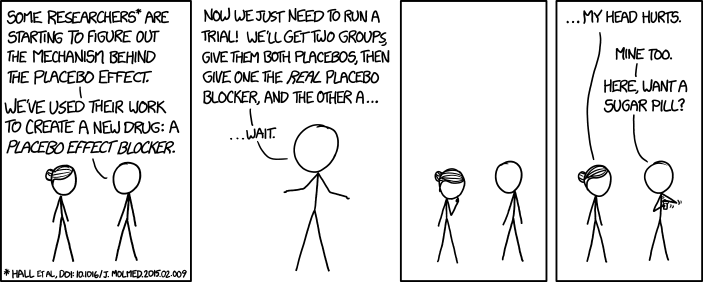
This is key.
Modern medicine, with the way hospitals and health insurance are run, do not and cannot address, for economic reasons, a pretty important aspect, albeit subjective, which is well-being.
The figure of the family doctor that takes his time and actually shows you attention has vanished. The average experience of a hospital visit is that of being treated like a number.
No surprise then that Reiki, or whatever other alternative practice really, that allows you to have the undivided attention, one day a week, from someone who cares about you, works wonders. Endorphins are powerful, Oxytocin specially, its role in modulating inflammation response is already known, and a lot of complains (chronic pain, mood disorders, mental function, even obesity) are tied to chronic inflammation.
So, yes, about time more serious study is done on the importance of well-being.